What Is Dementia? Symptoms, Causes, and What to Know

Last Updated: August 2026

What Is Dementia?

Hearing the word “dementia” can feel frightening, especially when you or someone you care about has started noticing changes in memory or thinking.

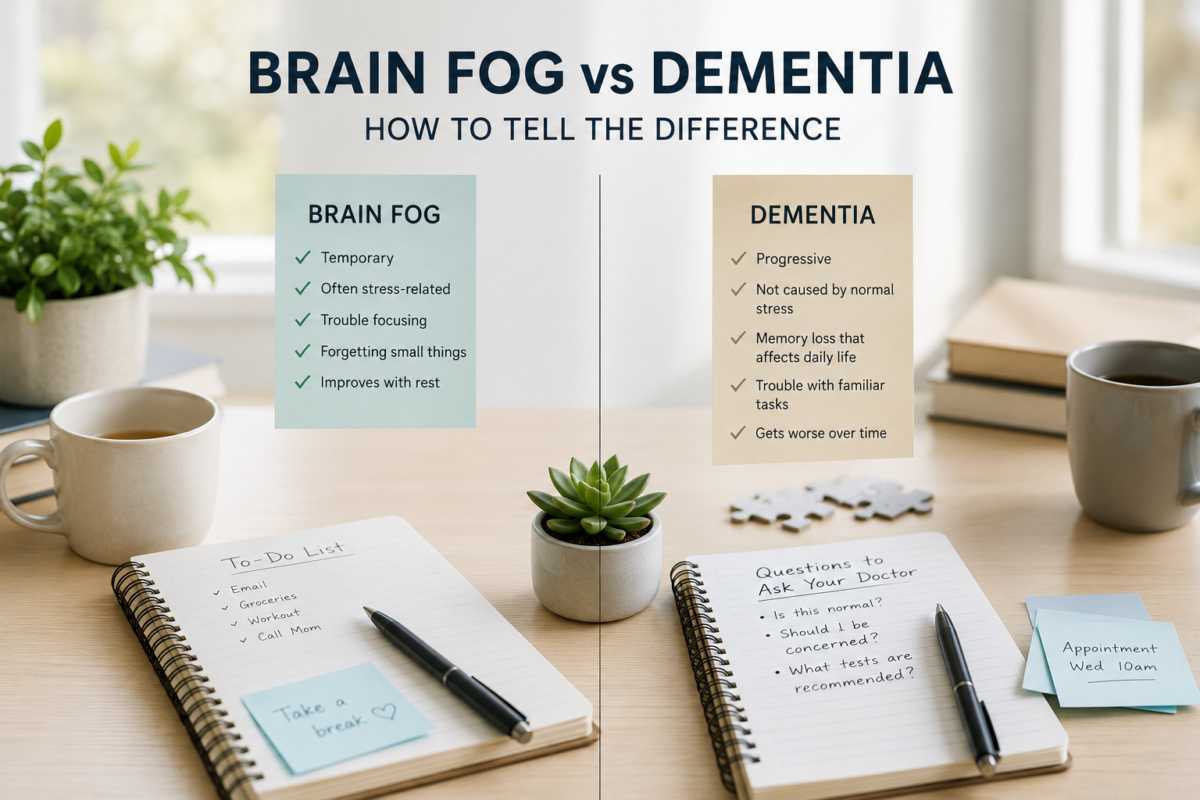
But dementia is not a single disease, and occasional forgetfulness does not automatically mean someone has dementia.

Dementia is a general term used to describe changes in memory, thinking, reasoning, or behavior that become significant enough to interfere with everyday life.

Understanding what dementia is—and what it isn’t—can make it easier to recognize meaningful changes and decide what to do next.

Is Dementia a Normal Part of Aging?

No. While some cognitive changes can happen as we get older, dementia is not considered a normal part of aging.

For example, occasionally forgetting a name and remembering it later can happen with normal aging. More concerning changes may involve repeatedly forgetting recently learned information, becoming confused in familiar places, or having increasing difficulty completing everyday tasks.

What matters is often not one isolated memory lapse, but the pattern, frequency, and impact of the changes over time.

What Are Common Signs of Dementia?

Dementia can look different from person to person. Changes may involve more than memory.

Common signs can include:

  • Frequently forgetting recently learned information
  • Repeating the same questions or stories
  • Difficulty planning or solving familiar problems
  • Becoming confused about time or place
  • Trouble completing familiar everyday tasks
  • Increasing difficulty finding or using words
  • Misplacing items and being unable to retrace steps
  • Changes in judgment or decision-making
  • Changes in mood, personality, or behavior
  • Memory or thinking problems that begin interfering with independence

Experiencing one of these symptoms does not necessarily mean someone has dementia. Stress, poor sleep, medications, depression, medical conditions, and other factors can also affect memory and concentration.

Dementia vs. Alzheimer’s Disease: What’s the Difference?

The terms are often used interchangeably, but they don’t mean exactly the same thing.

Dementia describes a group of symptoms. Alzheimer’s disease is one possible cause of those symptoms.

Alzheimer’s disease is the most common cause of dementia, but there are other forms and causes as well.

This distinction is important because determining why cognitive changes are happening can influence treatment, planning, and next steps.

What Can Cause Dementia?

Several diseases and conditions can cause dementia. These include Alzheimer’s disease, vascular dementia, Lewy body dementia, and frontotemporal dementia, among others.

Memory and thinking problems can also sometimes result from conditions that may be treatable or manageable.

That is one reason it can be helpful to seek a professional evaluation rather than assuming that memory changes are simply aging—or automatically assuming they are dementia.

When Should You Be Concerned?

Consider speaking with a healthcare professional when changes are:

Becoming more frequent.
Memory or thinking difficulties are happening regularly rather than occasionally.

Getting progressively worse.
There is a noticeable change compared with several months or years ago.

Interfering with everyday life.
Tasks that were once familiar are becoming difficult.

Being noticed by other people.
Family members, friends, or coworkers are beginning to notice changes as well.

The goal of an evaluation isn’t simply to receive a diagnosis. It can also help identify other possible explanations for cognitive changes.

How Is Dementia Evaluated?

There isn’t one single test that determines whether someone has dementia.

An evaluation may include a discussion of symptoms and medical history, cognitive testing, medication review, physical or neurological examinations, laboratory testing, and sometimes brain imaging or other assessments.

The exact process depends on the person’s symptoms and circumstances.

What Should You Do If You’re Worried About Memory Changes?

Start by paying attention to patterns rather than individual moments of forgetfulness.

Write down what you’re noticing, when it happens, and whether it is affecting everyday activities. Having specific examples can make conversations with a healthcare professional much more useful.

You don’t need to determine on your own whether a change is “normal” or dementia.

The next step is simply understanding what has changed and, when appropriate, getting it evaluated.

What Should You Do After an Alzheimer’s Biomarker Test?

Last Updated: June 2026

Receiving the results of an Alzheimer’s biomarker test can bring a mix of emotions.

For some people, the experience provides reassurance.

For others, it raises new questions and uncertainties.

You may be wondering:

  • What does this result actually mean?
  • Does an abnormal result mean I have Alzheimer’s disease?
  • What happens next?
  • Should I get additional testing?
  • How worried should I be?

These questions are completely understandable.

The good news is that biomarker test results are only one part of a much larger picture.

Whether you’ve had a blood test, imaging study, or another form of biomarker evaluation, understanding what your results mean—and what they don’t mean—can help you make informed decisions moving forward.

This guide explains practical next steps after an Alzheimer’s biomarker test and how to approach the results with clarity rather than fear.

First: Don’t Jump to Conclusions

One of the most important things to remember is this:

An abnormal biomarker result is not the same as an Alzheimer’s diagnosis.

Likewise, a normal result does not guarantee that future cognitive concerns will never develop.

Biomarker tests provide information about biological changes that may be associated with Alzheimer’s disease.

They do not tell the entire story.

Healthcare professionals consider many factors when evaluating cognitive health, including:

  • Symptoms
  • Medical history
  • Cognitive testing
  • Physical examinations
  • Imaging studies
  • Biomarker results

The goal is to understand the complete picture rather than relying on a single test result.

Understanding What Biomarkers Measure

Biomarkers are biological indicators that may provide information about processes occurring within the body.

In Alzheimer’s disease research, common biomarkers include:

pTau-217

A form of tau protein associated with Alzheimer’s-related changes.

Beta-Amyloid

A protein associated with amyloid plaque formation.

Amyloid-Related Measures

Used in certain blood tests and imaging studies.

These biomarkers may help identify biological changes associated with Alzheimer’s disease, but they do not directly measure:

  • Memory
  • Thinking abilities
  • Daily functioning
  • Quality of life

This distinction is important.

A person can have abnormal biomarkers and function normally.

Likewise, someone may experience cognitive symptoms that are unrelated to Alzheimer’s biomarkers.

What Does an Abnormal Result Mean?

Many people assume an abnormal result means:

“I have Alzheimer’s.”

In reality, the situation is often more complex.

An abnormal biomarker result may indicate evidence of biological changes associated with Alzheimer’s disease.

However, the result does not automatically determine:

  • Whether symptoms are present
  • The severity of symptoms
  • Future progression
  • Individual outcomes

Healthcare professionals interpret results within the broader clinical context.

This is why follow-up conversations are so important.

What Does a Normal Result Mean?

Normal results can be reassuring, but they should still be interpreted carefully.

Memory concerns can have many causes beyond Alzheimer’s disease, including:

  • Stress
  • Anxiety
  • Depression
  • Sleep disorders
  • Hormonal changes
  • Medication effects
  • Vitamin deficiencies
  • Other neurological conditions

A normal biomarker result may reduce concern about certain Alzheimer’s-related changes, but it does not necessarily explain every symptom.

If concerns persist, additional evaluation may still be appropriate.

Step 1: Review Your Results With a Qualified Healthcare Professional

The internet can provide education.

It cannot provide personalized interpretation.

If you’ve received biomarker test results, your first priority should be reviewing them with the healthcare professional who ordered the test.

Important questions include:

  • What exactly was measured?
  • What do my results indicate?
  • What are the limitations of this test?
  • How do the results fit with my symptoms?
  • Should I consider additional testing?

A professional interpretation can provide context that raw numbers alone cannot.

Step 2: Consider Your Symptoms

Biomarker results are only one part of the picture.

Ask yourself:

Are symptoms present?

Have symptoms changed over time?

Are daily activities being affected?

Have family members noticed changes?

Some people pursue testing because they are experiencing memory concerns.

Others pursue testing despite having no noticeable symptoms.

Understanding where you fall on that spectrum can help guide next steps.

Step 3: Understand Your Risk Factors

Your healthcare provider may discuss additional factors that influence cognitive health.

These can include:

Age

Age remains one of the strongest risk factors for Alzheimer’s disease.

Family History

A family history of Alzheimer’s disease may influence risk, though it does not determine outcomes.

Cardiovascular Health

Blood pressure, cholesterol, diabetes, and vascular health can all affect cognitive function.

Lifestyle Factors

Sleep, exercise, nutrition, stress management, and social engagement may also influence long-term brain health.

Biomarker results are most useful when considered alongside these broader factors.

Step 4: Determine Whether Additional Testing Is Recommended

Depending on your situation, additional evaluation may be suggested.

This could include:

Cognitive Testing

Formal assessments that evaluate memory, attention, language, and executive function.

Neurological Evaluation

A specialist may help determine whether symptoms warrant further investigation.

Imaging Studies

In some situations, brain imaging may be considered.

Ongoing Monitoring

Some individuals may simply benefit from periodic follow-up.

The appropriate path depends on the individual.

Step 5: Track Changes Over Time

One of the most useful things you can do is monitor symptoms consistently.

Rather than focusing on isolated incidents, pay attention to:

  • Frequency
  • Severity
  • Progression
  • Impact on daily life

Helpful examples include:

  • Forgetting appointments
  • Losing track of conversations
  • Difficulty finding words
  • Trouble managing familiar tasks

Tracking patterns can provide valuable information during future medical appointments.

Step 6: Avoid Catastrophic Thinking

Many people immediately imagine the worst after receiving an abnormal result.

This reaction is understandable.

However, uncertainty does not automatically mean disaster.

Remember:

  • Biomarkers are not diagnoses.
  • Results require context.
  • Individual outcomes vary.
  • Many factors influence cognitive health.

Approaching the situation with curiosity rather than panic can help support better decision-making.

Questions to Ask After Receiving Results

If you’ve recently received biomarker testing, consider asking:

What do these results actually mean?

How certain are these findings?

What additional information do we need?

Should I consider cognitive testing?

Should I see a neurologist?

How often should my cognitive health be monitored?

Are there lifestyle changes I should focus on?

What symptoms should I watch for?

These conversations can help transform uncertainty into a practical plan.

Should You Tell Family Members?

This is a personal decision.

Some people find support by sharing information with trusted family members.

Others prefer to wait until they better understand the results.

Helpful considerations include:

  • Emotional support
  • Family medical history
  • Future planning needs
  • Caregiver involvement

There is no universally correct approach.

The right decision depends on your circumstances and comfort level.

What Can You Do Today?

Regardless of test results, many people find it helpful to focus on habits that support overall brain health.

Examples include:

Prioritizing Sleep

Sleep plays an important role in memory and cognitive function.

Staying Physically Active

Regular movement supports both cardiovascular and brain health.

Managing Chronic Conditions

Blood pressure, diabetes, and cardiovascular health all matter.

Remaining Socially Engaged

Meaningful social interaction supports overall wellbeing.

Staying Mentally Active

Learning, reading, hobbies, and intellectual engagement can help maintain cognitive function.

These habits are valuable regardless of biomarker status.

When Should You Seek Further Evaluation?

Consider speaking with a healthcare professional if you notice:

  • Increasing memory difficulties
  • Frequent confusion
  • Difficulty managing familiar tasks
  • Changes in judgment
  • Noticeable cognitive decline over time
  • Concerns expressed by family members

Early conversations can often provide clarity and direction.

Key Takeaways

Receiving the results of an Alzheimer’s biomarker test can feel overwhelming, but it is important to remember that biomarker findings are only one piece of a much larger picture.

An abnormal result does not automatically mean Alzheimer’s disease is present.

A normal result does not explain every cognitive concern.

The most important next steps include:

  • Understanding your results
  • Reviewing findings with a healthcare professional
  • Considering additional testing if recommended
  • Monitoring symptoms over time
  • Focusing on long-term brain health

Most importantly, avoid making assumptions based on a single result.

The goal is not to react with fear but to use information thoughtfully and make informed decisions about what comes next.

Medical Disclaimer

This article is for educational purposes only and is not intended to diagnose, treat, or provide medical advice. Always consult a qualified healthcare professional regarding symptoms, testing decisions, or concerns about cognitive health.

Amyloid Plaques Explained: What They Are and Why They Matter

Last Updated: June 2026

If you’ve been researching memory concerns, Alzheimer’s disease, or new biomarker tests, you’ve probably encountered the term amyloid plaques.

They are often mentioned in news stories, research articles, brain scans, and discussions about Alzheimer’s disease.

But what exactly are amyloid plaques?

Do they cause Alzheimer’s disease?

Can they be detected through testing?

And if someone has amyloid plaque buildup, what does it actually mean?

The answers are more nuanced than many headlines suggest.

Understanding amyloid plaques can help you better interpret information about cognitive health, Alzheimer’s disease, and emerging biomarker tests.

This guide explains what researchers currently know about amyloid plaques, how they are connected to Alzheimer’s disease, and why they matter in conversations about brain health.

What Are Amyloid Plaques?

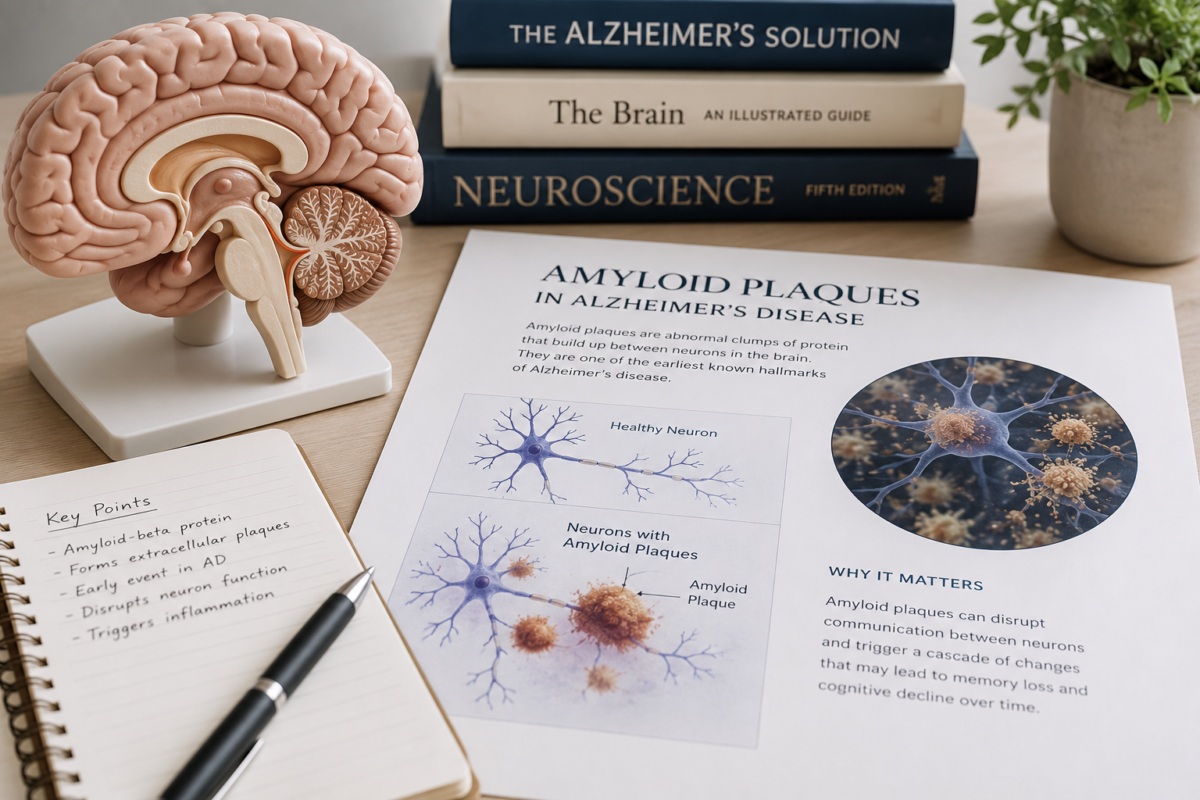
Amyloid plaques are clusters of protein fragments that accumulate between nerve cells in the brain.

These protein fragments come from a larger protein called:

Amyloid Precursor Protein (APP)

As APP is naturally broken down, smaller fragments are produced.

One of these fragments is called:

Beta-amyloid

In healthy brains, beta-amyloid is usually cleared away.

However, researchers believe that in some individuals, beta-amyloid may begin to accumulate and form plaques.

Over time, these deposits can collect into larger clusters known as amyloid plaques.

Why Are Amyloid Plaques Important?

Amyloid plaques have become one of the most widely recognized biological features associated with Alzheimer’s disease.

When scientists examine the brains of people who had Alzheimer’s disease, they often find:

Amyloid Plaques

Protein deposits outside nerve cells

and

Tau Tangles

Abnormal tau protein accumulations inside nerve cells

These findings have made amyloid plaques a major focus of Alzheimer’s research.

Do Amyloid Plaques Cause Alzheimer’s Disease?

This is one of the most important questions in neuroscience.

The short answer:

Researchers believe amyloid plaques play an important role, but they may not tell the entire story.

For many years, the dominant theory of Alzheimer’s disease suggested that amyloid buildup was a primary driver of the disease process.

This became known as the:

Amyloid Hypothesis

According to this theory:

Amyloid accumulation

Brain changes

Neuron damage

Cognitive decline

While there is substantial evidence supporting the importance of amyloid, scientists now recognize that Alzheimer’s disease is likely more complex.

Other factors may also contribute, including:

  • Tau protein changes
  • Inflammation
  • Vascular health
  • Genetics
  • Immune system responses
  • Aging-related changes

Today, most researchers view Alzheimer’s disease as a multifactorial condition rather than a disease explained by a single factor.

What Is Beta-Amyloid?

Beta-amyloid is the protein most commonly associated with amyloid plaques.

It exists naturally in the body.

The concern arises when beta-amyloid is not effectively cleared from the brain.

Over time, excess beta-amyloid may begin accumulating into larger deposits.

Researchers have identified different forms of beta-amyloid.

One commonly measured form is:

Beta-Amyloid 42

This form appears frequently in Alzheimer’s biomarker testing and research studies.

Can Amyloid Plaques Develop Before Symptoms?

One of the most interesting findings in Alzheimer’s research is that biological changes may begin years before noticeable symptoms appear.

Researchers have observed that some individuals show evidence of amyloid accumulation long before they experience:

  • Memory problems
  • Cognitive decline
  • Functional impairment

This discovery has helped drive the development of biomarker testing and early detection research.

However, it is important to remember:

The presence of amyloid does not automatically predict when—or even if—symptoms will develop.

Can Someone Have Amyloid Plaques Without Dementia?

Yes.

Researchers have found that some individuals have evidence of amyloid buildup but never develop dementia symptoms.

This is one reason why amyloid findings must be interpreted carefully.

Biomarkers provide information about biological changes.

They do not automatically determine:

  • Current cognitive function
  • Future cognitive outcomes
  • Individual prognosis

Context matters.

How Are Amyloid Plaques Detected?

Historically, amyloid plaques could only be confirmed through examination of brain tissue.

Today, researchers and healthcare professionals have additional tools.

Amyloid PET Scans

Positron Emission Tomography (PET) imaging can sometimes identify amyloid deposits within the brain.

These scans provide visual information about amyloid accumulation.

However, they may not be appropriate or necessary for every individual.

Cerebrospinal Fluid (CSF) Testing

In some situations, healthcare providers may evaluate Alzheimer’s biomarkers through cerebrospinal fluid analysis.

This involves collecting fluid through a lumbar puncture.

Blood-Based Biomarker Testing

Recent advances have led to the development of blood tests that evaluate biomarkers associated with Alzheimer’s disease.

Examples include tests that measure:

  • pTau-217
  • Beta-Amyloid 42

These tests are generating significant interest because they may offer a less invasive way to evaluate Alzheimer’s-related biomarkers.

What Is the Connection Between Amyloid and pTau?

Many newer biomarker tests evaluate both amyloid and tau-related markers.

Why?

Because researchers have found that looking at multiple biomarkers together may provide a more complete picture.

Amyloid and tau appear to be connected through biological processes that occur during Alzheimer’s disease.

This is why tests such as the:

Lumipulse® pTau-217/Beta Amyloid 42 Ratio Test

measure both biomarkers rather than focusing on only one.

What Does Amyloid Plaque Buildup Mean?

Many people assume that amyloid buildup automatically means Alzheimer’s disease.

The reality is more complicated.

Amyloid buildup may indicate biological changes associated with Alzheimer’s disease.

However:

  • It is not a standalone diagnosis.
  • It does not determine future outcomes.
  • It must be interpreted alongside symptoms and other findings.

This distinction is important because amyloid findings can sometimes create unnecessary anxiety when viewed outside their proper context.

Why Researchers Are Interested in Early Detection

Scientists hope that identifying biological changes earlier may eventually help improve:

  • Risk assessment
  • Research participation
  • Treatment planning
  • Clinical decision-making

Earlier identification of Alzheimer’s-related changes remains an active area of research.

This is one reason why biomarker testing has received increasing attention.

Common Questions About Amyloid Plaques

Can Amyloid Plaques Be Reversed?

Research in this area continues to evolve.

Scientists are studying various approaches aimed at reducing amyloid accumulation.

The effectiveness and long-term impact of these approaches remain active areas of investigation.

Do Lifestyle Habits Affect Amyloid?

Researchers continue exploring how:

  • Sleep
  • Exercise
  • Nutrition
  • Cardiovascular health
  • Stress management

may influence overall brain health.

While healthy habits support cognitive wellbeing, no lifestyle strategy can guarantee prevention of Alzheimer’s disease.

Should Everyone Be Tested for Amyloid?

Not necessarily.

Testing decisions depend on:

  • Symptoms
  • Age
  • Medical history
  • Family history
  • Healthcare provider recommendations

Biomarker testing is not universally recommended for all adults.

What Should You Do If You’re Concerned?

If you are worried about memory changes or cognitive symptoms:

Step 1

Track symptoms over time.

Step 2

Learn what is considered normal aging versus potential warning signs.

Step 3

Discuss concerns with a healthcare professional.

Step 4

Consider whether cognitive testing or biomarker evaluation may be appropriate based on your individual circumstances.

The goal is not to jump to conclusions but to make informed decisions.

Key Takeaways

Amyloid plaques are clusters of beta-amyloid protein that can accumulate within the brain.

They are one of the hallmark biological features associated with Alzheimer’s disease and have become a major focus of research.

However, amyloid plaques are only one piece of a much larger picture.

Their presence does not automatically mean a person has Alzheimer’s disease, nor can they predict exactly how an individual’s cognitive health may change over time.

As new biomarker tests continue to emerge, understanding what amyloid plaques are—and what they are not—can help reduce confusion and support more informed conversations about brain health.

Medical Disclaimer

This article is for educational purposes only and is not intended to diagnose, treat, or provide medical advice. Always consult a qualified healthcare professional regarding symptoms, testing decisions, or concerns about cognitive health.

What Is the Lumipulse® pTau-217/Beta Amyloid 42 Ratio Test?

Last Updated: June 2026

In recent years, researchers have made significant progress in developing tests that may help identify biological changes associated with Alzheimer’s disease earlier than ever before.

One test receiving increasing attention is the Lumipulse® pTau-217/Beta Amyloid 42 Ratio Test.

For many people, hearing about new Alzheimer’s blood tests can raise important questions:

  • What exactly does this test measure?
  • Who might benefit from it?
  • Does a positive result mean I have Alzheimer’s disease?
  • What should I do if my results are abnormal?

Understanding what this test can—and cannot—tell us is important.

This guide explains the Lumipulse pTau-217/Beta Amyloid 42 Ratio Test, how it works, and what it may mean for individuals concerned about memory changes and cognitive health.

What Is the Lumipulse® pTau-217/Beta Amyloid 42 Ratio Test?

The Lumipulse pTau-217/Beta Amyloid 42 Ratio Test is a laboratory test designed to measure specific biomarkers associated with Alzheimer’s disease.

Biomarkers are measurable biological indicators that may provide information about processes occurring inside the body.

In Alzheimer’s research, two biomarkers have received significant attention:

  • Phosphorylated tau (pTau-217)
  • Beta amyloid 42

Researchers believe changes in these proteins may be associated with the biological processes involved in Alzheimer’s disease.

The Lumipulse test evaluates the relationship between these biomarkers to help healthcare professionals assess whether additional evaluation may be appropriate.

What Are Biomarkers?

A biomarker is any measurable characteristic that provides information about a biological process.

Examples include:

  • Blood pressure
  • Cholesterol levels
  • Blood glucose levels
  • Hormone levels

In brain health and neurology, biomarkers may help researchers and healthcare professionals better understand changes occurring within the brain.

It is important to understand that biomarkers are not the same as symptoms.

A person may experience memory concerns without abnormal biomarker findings.

Likewise, biomarker changes can occur before noticeable symptoms appear.

Understanding pTau-217

Tau is a protein naturally found in the brain.

Its normal role is to help support the structure and function of nerve cells.

Researchers have found that certain forms of tau become altered during Alzheimer’s disease.

One of these forms is called:

Phosphorylated Tau 217 (pTau-217)

Elevated pTau-217 levels have been associated with biological changes linked to Alzheimer’s disease in research studies.

Because of this, pTau-217 has become one of the most closely studied Alzheimer’s biomarkers.

Understanding Beta Amyloid 42

Beta amyloid is another protein involved in Alzheimer’s research.

Researchers believe that abnormal accumulation of beta amyloid may contribute to the development of amyloid plaques within the brain.

Amyloid plaques are one of the hallmark features observed in Alzheimer’s disease.

Beta Amyloid 42 is a specific form of amyloid that researchers frequently measure when evaluating Alzheimer’s-related biomarkers.

Why Measure the Ratio?

The Lumipulse test does not simply look at one biomarker in isolation.

Instead, it evaluates the relationship between:

  • pTau-217
  • Beta Amyloid 42

Researchers have found that examining these biomarkers together may provide additional information compared with measuring either biomarker alone.

The goal is to help identify biological patterns that may warrant further clinical evaluation.

Is This an Alzheimer’s Blood Test?

Many news reports describe tests involving pTau biomarkers as “Alzheimer’s blood tests.”

While that description is understandable, it can sometimes be misleading.

The Lumipulse pTau-217/Beta Amyloid 42 Ratio Test is not intended to independently diagnose Alzheimer’s disease.

A diagnosis typically involves multiple factors, including:

  • Medical history
  • Cognitive symptoms
  • Physical examination
  • Cognitive testing
  • Imaging studies when appropriate
  • Laboratory testing

Biomarker testing represents one piece of a much larger clinical picture.

Who Might Be Offered This Test?

Healthcare professionals may consider biomarker testing for individuals experiencing:

  • Memory concerns
  • Cognitive symptoms
  • Changes in thinking abilities
  • Questions regarding possible neurodegenerative conditions

Testing decisions are individualized.

Not everyone experiencing memory changes requires biomarker testing.

Healthcare providers consider factors such as:

  • Age
  • Symptoms
  • Medical history
  • Family history
  • Existing evaluations

What Does an Abnormal Result Mean?

This is one of the most important questions people ask.

An abnormal biomarker result does not automatically mean a person has Alzheimer’s disease.

Likewise, it does not predict exactly how symptoms may progress in the future.

Biomarker results must be interpreted within the broader context of:

  • Symptoms
  • Medical history
  • Cognitive evaluation
  • Additional testing when necessary

Only a qualified healthcare professional can explain what a particular result may mean for an individual situation.

What Does a Normal Result Mean?

Normal results can provide useful information, but they should not be viewed as a guarantee regarding future cognitive health.

Symptoms can have many possible causes, including:

  • Stress
  • Sleep disorders
  • Depression
  • Anxiety
  • Medication effects
  • Hormonal changes
  • Medical conditions unrelated to Alzheimer’s disease

A healthcare professional may still recommend further evaluation if concerns continue.

How Does This Compare to Cognitive Testing?

Cognitive testing and biomarker testing serve different purposes.

Cognitive Testing

Measures:

  • Memory
  • Attention
  • Language
  • Problem-solving
  • Executive function

Biomarker Testing

Measures:

  • Biological indicators associated with Alzheimer’s disease

Many evaluations involve both approaches because they provide different types of information.

How Does This Compare to Brain Imaging?

Historically, some Alzheimer’s biomarkers have been evaluated through imaging techniques such as PET scans.

Blood-based biomarker tests may offer potential advantages including:

  • Greater accessibility
  • Less invasive procedures
  • Lower cost in some situations
  • Faster testing process

However, healthcare providers determine which testing approach is most appropriate based on individual circumstances.

Questions to Ask Your Healthcare Provider

If you are considering biomarker testing, it may be helpful to ask:

  • Why are you recommending this test?
  • What information can this test provide?
  • What are the limitations?
  • How might the results affect next steps?
  • Will I need additional testing?
  • How should results be interpreted alongside my symptoms?

These questions can help create a more informed discussion.

What Should You Do If You’re Concerned About Memory Changes?

If you have noticed persistent changes in memory, focus, or thinking abilities:

Step 1: Track Symptoms

Keep notes regarding:

  • Frequency
  • Severity
  • Situations where symptoms occur

Step 2: Learn What’s Normal

Many memory changes can occur with normal aging.

Understanding the difference between expected changes and potential warning signs can reduce unnecessary anxiety.

Step 3: Speak With a Healthcare Professional

Persistent concerns deserve discussion with a qualified provider.

Step 4: Consider Recommended Testing

Testing decisions should be guided by your healthcare team rather than internet searches alone.

Key Takeaways

The Lumipulse® pTau-217/Beta Amyloid 42 Ratio Test is a biomarker test designed to measure biological indicators associated with Alzheimer’s disease.

It evaluates two important biomarkers:

  • pTau-217
  • Beta Amyloid 42

While these biomarkers may provide valuable information, they do not independently diagnose Alzheimer’s disease.

Biomarker testing is most useful when considered alongside symptoms, cognitive testing, medical history, and professional evaluation.

If you’re concerned about memory changes, understanding your options and seeking appropriate guidance can help you move from uncertainty toward greater clarity.

Medical Disclaimer

This article is for educational purposes only and is not intended to diagnose, treat, or provide medical advice. Always consult a qualified healthcare professional regarding symptoms, testing decisions, or concerns about cognitive health.

How to Reduce Dementia Risk Naturally

Last Updated: June 2026

One of the most common questions people ask after learning about dementia risk is:

“Is there anything I can do?”

The answer is encouraging.

While no strategy can guarantee that dementia will never occur, research continues to suggest that certain lifestyle habits may support long-term brain health and help reduce risk factors associated with cognitive decline.

This is especially important because many people assume dementia is determined entirely by genetics.

In reality, cognitive health is influenced by a combination of factors, including:

  • Age
  • Genetics
  • Cardiovascular health
  • Sleep
  • Physical activity
  • Social engagement
  • Mental stimulation
  • Overall health habits

The goal isn’t to pursue perfection.

The goal is to focus on the factors you can influence and build habits that support healthy cognitive aging over time.

Understanding Dementia Risk

Dementia is a complex condition with multiple contributing factors.

Some risk factors cannot be changed.

Examples include:

Age

Growing older remains one of the strongest risk factors.

Family History

Having a close relative with dementia may increase risk.

Genetics

Certain genetic factors can influence susceptibility.

Fortunately, many other factors remain within your control.

These are known as modifiable risk factors.

Start With Your Heart

One of the most important things to understand is that brain health and heart health are closely connected.

The brain relies on healthy blood flow to function properly.

Conditions that affect cardiovascular health may also influence cognitive health.

Examples include:

  • High blood pressure
  • Diabetes
  • High cholesterol
  • Heart disease

Supporting cardiovascular health may also support long-term brain health.

Move Your Body Regularly

Physical activity is one of the most consistently recommended habits for healthy aging.

Regular movement may support:

  • Blood flow to the brain
  • Cardiovascular health
  • Mood regulation
  • Sleep quality
  • Stress management

The goal isn’t extreme fitness.

Consistency matters more than intensity.

Examples include:

  • Walking
  • Swimming
  • Cycling
  • Strength training
  • Yoga

Choose activities you enjoy and can maintain over time.

Prioritize Sleep

Sleep is one of the most overlooked aspects of cognitive health.

During sleep, the brain performs important functions related to:

  • Memory consolidation
  • Learning
  • Recovery
  • Cognitive performance

Poor sleep may contribute to:

  • Brain fog
  • Reduced concentration
  • Memory complaints

Helpful sleep habits include:

Maintain a Consistent Schedule

Try to go to bed and wake up at similar times.

Create a Sleep-Friendly Environment

Keep the bedroom cool, dark, and quiet.

Limit Stimulants Late in the Day

Reduce caffeine and screen exposure before bedtime.

Address Sleep Disorders

Conditions such as sleep apnea can affect both sleep quality and cognitive health.

Stay Socially Connected

Humans are social by nature.

Meaningful social interaction challenges multiple cognitive systems at once.

Conversation requires:

  • Attention
  • Memory
  • Language
  • Problem-solving

Research continues to explore the relationship between social engagement and healthy cognitive aging.

Examples of social connection include:

  • Family gatherings
  • Community involvement
  • Volunteer work
  • Clubs and organizations
  • Shared hobbies

Even small interactions can contribute to mental stimulation and emotional well-being.

Keep Learning

The brain benefits from challenge and engagement throughout life.

Activities that encourage learning may support cognitive resilience.

Examples include:

Reading

Books, articles, and educational content.

Learning New Skills

Languages, musical instruments, technology, or hobbies.

Games and Puzzles

Crosswords, strategy games, and problem-solving activities.

Creative Activities

Writing, painting, crafting, or other creative pursuits.

The goal isn’t to “train your brain.”

It’s to remain mentally engaged and curious.

Manage Chronic Stress

Stress is a normal part of life.

However, chronic stress can affect:

  • Attention
  • Memory
  • Concentration
  • Sleep quality

Many people notice that memory feels worse during periods of high stress.

Strategies that may help include:

Exercise

Movement supports both physical and mental well-being.

Mindfulness Practices

Meditation, breathing exercises, and relaxation techniques.

Time Outdoors

Spending time in nature may support stress reduction.

Meaningful Activities

Engaging in activities that provide purpose and enjoyment.

Eat for Overall Health

No single food prevents dementia.

However, dietary patterns that support cardiovascular health may also support brain health.

General principles include:

Emphasize Whole Foods

Fruits, vegetables, whole grains, legumes, and healthy fats.

Include Healthy Protein Sources

Fish, beans, nuts, and lean proteins.

Limit Highly Processed Foods

Reducing excessive sugar and heavily processed foods may support overall health.

Stay Hydrated

Even mild dehydration can affect concentration and mental performance.

The goal is sustainable, balanced nutrition rather than restrictive diets.

Manage Existing Health Conditions

Certain medical conditions may influence cognitive health.

Work with healthcare professionals to manage:

  • High blood pressure
  • Diabetes
  • High cholesterol
  • Obesity
  • Sleep disorders

Consistent management often benefits both overall health and brain health.

Protect Your Hearing

Emerging research suggests a relationship between hearing health and cognitive well-being.

If you notice hearing difficulties:

  • Schedule a hearing evaluation
  • Use hearing aids if recommended
  • Address hearing concerns early

Improving hearing may also improve communication and social engagement.

Avoid Smoking

Smoking affects blood vessels throughout the body, including those that supply the brain.

Quitting smoking supports:

  • Cardiovascular health
  • Lung health
  • Overall well-being

And may reduce risk factors associated with cognitive decline.

Focus on What You Can Control

One of the most important lessons in brain health is this:

You cannot control every risk factor.

You can control many daily habits.

Worrying about future possibilities often creates stress without improving outcomes.

Taking positive action, however, can provide both practical benefits and peace of mind.

Frequently Asked Questions

Can dementia be prevented?

There is currently no guaranteed way to prevent dementia. However, many lifestyle habits may support brain health and help reduce certain risk factors.


Does exercise help reduce dementia risk?

Research suggests that physical activity supports cardiovascular and cognitive health.


Is dementia caused only by genetics?

No. Genetics influence risk, but lifestyle and health factors also play important roles.


What is the best diet for brain health?

There is no single “brain diet.” Balanced eating patterns that support overall health are generally recommended.


Is it too late to improve brain health after 50?

No. Healthy habits can provide benefits at many stages of life.

Final Thoughts

Many people feel powerless when they first learn about dementia risk.

But the reality is that cognitive health is influenced by far more than genetics alone.

While no strategy can guarantee specific outcomes, many habits that support overall health also support brain health.

The goal isn’t perfection.

It’s consistency.

Small choices repeated over time often have a greater impact than dramatic changes that don’t last.

Focus on what you can control.

Stay engaged.

Stay active.

Stay connected.

And remember that supporting your brain is not a single decision—it’s a lifelong practice.

What Happens During Cognitive Testing?

Last Updated: June 2026

For many people, the idea of cognitive testing can feel intimidating.

Perhaps you’ve noticed changes in memory, concentration, or mental clarity and are wondering whether it’s time to seek evaluation.

Or maybe a healthcare provider has suggested testing, and you’re unsure what to expect.

One of the biggest reasons people delay evaluation is fear of the unknown.

Questions like these are common:

  • What happens during cognitive testing?
  • Is it difficult?
  • Will I be diagnosed with dementia?
  • What if I don’t do well?

The good news is that cognitive testing is designed to gather information—not to judge, label, or embarrass you.

Its purpose is to help healthcare professionals better understand how your brain is functioning and determine whether additional evaluation may be helpful.

Understanding the process can make it feel much less overwhelming.

What Is Cognitive Testing?

Cognitive testing is a collection of assessments that evaluate different areas of thinking and memory.

Healthcare professionals may assess:

  • Memory
  • Attention
  • Language
  • Problem-solving
  • Reasoning
  • Processing speed
  • Executive function

The goal is to compare your performance to what is generally expected for someone of a similar age and background.

Testing provides valuable information but is only one part of a larger evaluation process.

Why Might a Doctor Recommend Cognitive Testing?

Healthcare providers may suggest testing if:

  • Memory concerns are becoming more noticeable
  • Family members have observed changes
  • Daily functioning is being affected
  • Cognitive symptoms are causing significant concern
  • There is a need to establish a baseline for future comparison

Testing helps identify whether symptoms appear consistent with normal aging or whether additional investigation may be warranted.

Step 1: Medical History Review

Before formal testing begins, a healthcare professional will typically discuss your medical history.

Topics may include:

Current Symptoms

When did symptoms begin?

How often do they occur?

Have they changed over time?

General Health

Certain medical conditions can affect cognitive performance.

Examples include:

  • High blood pressure
  • Diabetes
  • Thyroid disorders
  • Sleep disorders

Medications

Some medications can contribute to memory complaints or brain fog.

Family History

Healthcare providers may ask about:

  • Alzheimer’s disease
  • Dementia
  • Neurological conditions

among close family members.

Step 2: Discussion of Cognitive Concerns

The healthcare provider will often ask specific questions about your experiences.

Examples may include:

  • What memory changes have you noticed?
  • Are symptoms affecting daily life?
  • Have family members expressed concern?
  • What situations seem most challenging?

This conversation helps create context for testing results.

Step 3: Cognitive Assessment

This is the part most people think of when they hear the term “cognitive testing.”

The assessment typically involves a series of questions and tasks.

The exact format varies depending on the healthcare provider and testing approach.

Memory Tasks

You may be asked to:

  • Remember words
  • Recall information after a short delay
  • Repeat information

These tasks help evaluate short-term memory and recall.

Attention Tasks

Examples may include:

  • Following instructions
  • Counting exercises
  • Concentration activities

Attention plays a critical role in memory performance.

Language Tasks

You may be asked to:

  • Name objects
  • Define words
  • Follow verbal instructions

These tasks assess language and communication abilities.

Problem-Solving Tasks

Some assessments evaluate reasoning and decision-making abilities.

These exercises help identify strengths and areas that may require further attention.

Step 4: Functional Assessment

Healthcare professionals often want to understand how cognitive changes affect daily life.

Topics may include:

  • Managing finances
  • Driving
  • Household responsibilities
  • Medication management
  • Social activities

This information is important because daily functioning is often a key factor in determining whether symptoms may be consistent with normal aging, MCI, or dementia.

Step 5: Additional Evaluation (If Needed)

In some cases, healthcare providers may recommend additional assessments.

These could include:

Physical Examination

To evaluate overall health.

Blood Tests

To identify potential contributors such as:

  • Vitamin deficiencies
  • Thyroid disorders
  • Other medical conditions

Sleep Evaluation

Sleep disorders can significantly affect cognitive performance.

Imaging Studies

In certain situations, brain imaging may be recommended.

Additional testing depends on individual circumstances and symptoms.

How Long Does Cognitive Testing Take?

The length of testing varies.

Brief Screening

Some cognitive screening tools take only a few minutes.

Comprehensive Evaluations

More detailed assessments may take several hours and may occur across multiple appointments.

The type of evaluation depends on the reason for testing and the healthcare provider’s recommendations.

What Does Cognitive Testing Feel Like?

Many people worry that testing will feel stressful or intimidating.

In reality, most assessments feel more like structured conversations and exercises.

It’s normal to:

  • Forget some answers
  • Feel challenged by certain questions
  • Need extra time to respond

The goal is not perfection.

The goal is gathering useful information.

Healthcare professionals understand that everyone has strengths and weaknesses.

What Happens After Testing?

Once testing is complete, results are reviewed within the context of:

  • Age
  • Education
  • Health history
  • Symptoms
  • Daily functioning

A healthcare professional will discuss findings and explain whether any additional evaluation is recommended.

What If Results Are Normal?

This is a common outcome.

Normal results may suggest that symptoms are related to factors such as:

  • Stress
  • Poor sleep
  • Anxiety
  • Hormonal changes
  • Normal aging

For many individuals, testing provides reassurance and peace of mind.

What If Results Show Cognitive Changes?

Cognitive changes do not automatically mean dementia.

Results may suggest:

Mild Cognitive Impairment (MCI)

Noticeable cognitive changes that do not significantly interfere with independence.

Need for Further Evaluation

Additional information may be needed before conclusions can be reached.

Other Contributing Factors

Medical or lifestyle factors may be influencing cognitive performance.

The purpose of testing is understanding—not assuming the worst.

Common Myths About Cognitive Testing

Myth: Testing Diagnoses Dementia Immediately

Reality:

Testing is one part of a broader evaluation process.

Myth: If I Do Poorly, I Have Alzheimer’s Disease

Reality:

Many factors can affect test performance.

Myth: Testing Is Only for Older Adults

Reality:

Anyone experiencing cognitive concerns may discuss evaluation with a healthcare professional.

Myth: It’s Better Not to Know

Reality:

Many people find that information reduces uncertainty and helps guide future decisions.

Frequently Asked Questions

Is cognitive testing painful?

No. Cognitive testing involves questions, conversations, and thinking exercises.


Can I prepare for cognitive testing?

There is no special preparation required. It’s most helpful to arrive well-rested and ready to discuss your concerns.


What if I feel nervous?

Feeling nervous is completely normal. Healthcare professionals understand that many people feel anxious about testing.


Can testing determine whether memory problems are normal aging?

Testing may provide valuable information that helps healthcare professionals evaluate cognitive concerns.


How often should testing be repeated?

This depends on individual circumstances and should be discussed with your healthcare provider.

Final Thoughts

For many people, cognitive testing sounds far more intimidating than it actually is.

In reality, it is simply a tool that helps healthcare professionals better understand how your brain is functioning.

The goal is not to pass or fail.

The goal is to gather information, reduce uncertainty, and make informed decisions about your health.

If memory concerns have been weighing on your mind, understanding what happens during testing may be the first step toward feeling more confident about what comes next.

When Should You Get Cognitive Testing?

Last Updated: June 2026

Many people worry about memory changes long before they ever consider cognitive testing.

Perhaps you’ve been forgetting words more often. Maybe you’re relying on reminders more than you used to. Or perhaps a family history of dementia has made every memory lapse feel more significant.

At some point, a common question arises:

“Should I get tested?”

For many adults, the idea of cognitive testing can feel intimidating.

Some worry about what the results might reveal.

Others aren’t sure whether their symptoms are serious enough to justify an evaluation.

The truth is that cognitive testing is simply a tool. Its purpose is to provide information, reduce uncertainty, and help determine whether further evaluation is needed.

Understanding when cognitive testing may be appropriate can help you make informed decisions without unnecessary fear.

What Is Cognitive Testing?

Cognitive testing refers to assessments designed to evaluate different aspects of thinking and memory.

These assessments may measure:

  • Memory
  • Attention
  • Language
  • Problem-solving
  • Reasoning
  • Processing speed

Testing is often used to better understand cognitive symptoms and identify whether changes are within the expected range for age.

Importantly, cognitive testing alone does not diagnose dementia.

It is one piece of a broader evaluation process.

Why Do People Get Cognitive Testing?

People seek testing for many different reasons.

Memory Concerns

They’ve noticed increasing forgetfulness.

Family History

A parent or close relative experienced dementia.

Cognitive Symptoms

They are experiencing:

  • Brain fog
  • Word-finding difficulties
  • Reduced concentration
  • Difficulty remembering information

Reassurance

They want clarity about whether symptoms appear consistent with normal aging.

Monitoring Changes

They want a baseline for future comparison.

When Might Cognitive Testing Be Appropriate?

There is no single rule that applies to everyone.

However, certain situations may warrant further evaluation.

Symptoms Are Becoming More Frequent

Everyone forgets things occasionally.

The concern increases when memory problems become more frequent or noticeable over time.

Examples include:

  • Increasing forgetfulness
  • Repeatedly losing track of conversations
  • More difficulty recalling recent events

Daily Life Is Being Affected

Consider testing if cognitive changes begin interfering with:

  • Work responsibilities
  • Financial management
  • Household tasks
  • Driving
  • Social interactions

Daily functioning is often one of the most important indicators healthcare professionals consider.

Family Members Have Expressed Concern

Sometimes those closest to us notice changes before we do.

If family members or friends have repeatedly expressed concern about memory or thinking abilities, it may be worth exploring further.

You Have a Strong Family History

Family history does not guarantee future cognitive decline.

However, some individuals choose testing because they want greater clarity and peace of mind.

Symptoms Are Causing Significant Anxiety

In some situations, uncertainty itself becomes stressful.

Testing may provide reassurance or help guide next steps.

Situations That May Not Require Immediate Testing

Not every memory concern requires evaluation.

Many cognitive complaints are linked to factors such as:

Stress

Chronic stress can affect attention and memory.

Poor Sleep

Sleep deprivation often affects concentration and recall.

Menopause and Hormonal Changes

Hormonal shifts can contribute to brain fog and forgetfulness.

Anxiety

Anxiety may increase awareness of normal memory lapses.

Temporary Life Stressors

Major life events can affect cognitive performance.

In these situations, symptoms may improve when underlying causes are addressed.

What Are Some Signs That Deserve Closer Attention?

Consider discussing concerns with a healthcare professional if you notice:

Frequent Forgetting of Recent Information

Forgetting conversations, appointments, or recently learned details.

Repeating Questions

Asking the same questions multiple times.

Difficulty Managing Familiar Tasks

Tasks that were once routine become increasingly difficult.

Getting Lost in Familiar Places

Confusion or disorientation in familiar environments.

Progressive Worsening

Symptoms gradually become more severe over time.

Patterns are often more important than isolated incidents.

Is There a “Right Age” for Cognitive Testing?

There is no universal age recommendation.

Most healthcare professionals focus on symptoms rather than age alone.

Some individuals seek testing in their 50s or 60s because of:

  • Family history
  • Personal concerns
  • Baseline assessment goals

Others may not require evaluation unless symptoms become noticeable.

The decision should be based on individual circumstances rather than a specific birthday.

What Are the Benefits of Cognitive Testing?

Testing can provide several advantages.

Greater Clarity

Testing may help determine whether symptoms appear consistent with normal aging or warrant further evaluation.

Earlier Identification of Concerns

If problems are present, earlier identification often allows for better planning and support.

Reassurance

Many people discover that their symptoms are not consistent with significant cognitive impairment.

Establishing a Baseline

Testing can provide a reference point for future comparisons.

What If the Results Are Normal?

This is actually a common outcome.

Normal results may indicate that symptoms are related to:

  • Stress
  • Sleep issues
  • Anxiety
  • Hormonal changes
  • Normal aging

For many individuals, testing provides reassurance and reduces uncertainty.

What If Further Evaluation Is Recommended?

Additional evaluation does not automatically mean dementia is present.

Healthcare professionals may simply want to gather more information.

This could include:

  • Medical assessments
  • Medication reviews
  • Sleep evaluations
  • Additional cognitive testing

The goal is understanding—not assuming the worst.

How Can You Prepare for Cognitive Testing?

If you’re considering evaluation:

Track Symptoms

Keep notes about memory concerns and patterns.

Review Medical History

Be prepared to discuss:

  • Medications
  • Health conditions
  • Sleep habits
  • Family history

Bring Questions

Write down concerns and topics you’d like to discuss.

Consider Bringing a Family Member

A trusted companion may provide additional observations and support.

Frequently Asked Questions

Should I get cognitive testing if I occasionally forget things?

Occasional forgetfulness is common and does not automatically require testing. The decision depends on patterns, frequency, and overall impact on daily life.

Can cognitive testing diagnose dementia?

No. Testing is one part of a broader evaluation process and does not provide a diagnosis on its own.

Is cognitive testing only for older adults?

No. Testing may be appropriate whenever cognitive concerns arise, regardless of age.

What if I’m worried because of family history?

Family history can increase concern, but it does not guarantee future cognitive decline. Discussing concerns with a healthcare professional may help determine whether testing is appropriate.

Is it better to get tested early?

When symptoms are persistent or concerning, early evaluation often provides greater clarity and more opportunities for planning.

Final Thoughts

Deciding whether to pursue cognitive testing can feel overwhelming.

Many people hesitate because they fear what the results might reveal.

But testing is not about expecting bad news.

It’s about gaining information, understanding your symptoms, and making informed decisions about your health.

If memory concerns are affecting your peace of mind, discussing them with a healthcare professional may be a valuable next step.

Because clarity is often more empowering than uncertainty.

Early Signs of Alzheimer’s Disease Explained

Last Updated: June 2026

Many people begin researching Alzheimer’s disease after noticing memory changes in themselves or a loved one.

Perhaps you’ve forgotten a recent conversation. Maybe you’ve noticed increasing difficulty finding words. Or perhaps a family history of dementia has made every memory lapse feel more significant.

It’s natural to wonder:

“Could this be Alzheimer’s?”

While occasional forgetfulness is common as we age, Alzheimer’s disease involves patterns of cognitive change that go beyond normal aging.

Understanding those patterns can help reduce uncertainty and provide a clearer perspective on what may deserve further attention.

The goal of this guide is not to diagnose symptoms or create fear.

It’s to explain what Alzheimer’s disease is, what early signs may look like, and how those signs differ from typical age-related changes.

What Is Alzheimer’s Disease?

Alzheimer’s disease is a progressive neurological condition that affects memory, thinking, and behavior.

It is the most common cause of dementia.

Over time, Alzheimer’s disease affects the brain’s ability to:

  • Form new memories
  • Retrieve information
  • Solve problems
  • Communicate effectively
  • Manage everyday activities

Symptoms typically develop gradually and become more noticeable over time.

Because changes often occur slowly, they may initially be mistaken for normal aging.

Alzheimer’s Disease vs Normal Aging

Many adults occasionally forget names, misplace items, or lose their train of thought.

These experiences are common.

The difference is that Alzheimer’s disease typically involves:

  • Increasing frequency of symptoms
  • Difficulty learning new information
  • Progressive worsening
  • Impact on daily functioning

The overall pattern is often more important than any single symptom.

Early Sign #1: Difficulty Remembering Recently Learned Information

One of the most common early symptoms involves difficulty retaining new information.

Examples may include:

  • Forgetting recent conversations
  • Forgetting appointments
  • Repeatedly asking the same questions
  • Difficulty recalling information that was recently discussed

This differs from occasionally forgetting a detail and remembering it later.

Early Sign #2: Increased Reliance on Memory Aids

Many people use calendars and reminders.

The concern arises when individuals become increasingly dependent on them for tasks they previously managed without difficulty.

Examples include:

  • Forgetting important dates
  • Missing appointments despite reminders
  • Difficulty remembering routine responsibilities

Early Sign #3: Difficulty Managing Familiar Tasks

Tasks that were once routine may become increasingly challenging.

Examples include:

  • Paying bills
  • Following recipes
  • Managing medications
  • Operating familiar devices

This change often develops gradually rather than suddenly.

Early Sign #4: Word-Finding Difficulties

Many adults occasionally struggle to find the right word.

With Alzheimer’s disease, language changes may become more noticeable.

Examples include:

  • Frequent pauses during conversation
  • Difficulty naming familiar objects
  • Replacing words with unusual alternatives
  • Increased frustration during communication

Early Sign #5: Misplacing Items in Unusual Places

Occasionally losing keys or glasses is common.

Potential warning signs may include:

  • Placing items in unusual locations
  • Being unable to retrace steps
  • Frequently accusing others of moving possessions

The pattern and frequency are important.

Early Sign #6: Confusion About Time or Place

Some individuals experience increasing difficulty with:

  • Dates
  • Schedules
  • Familiar locations
  • Established routines

Examples may include:

  • Losing track of time
  • Becoming confused about appointments
  • Getting lost in familiar environments

Early Sign #7: Changes in Judgment or Decision-Making

Cognitive changes can affect reasoning and decision-making.

Examples may include:

  • Poor financial choices
  • Increased vulnerability to scams
  • Unusual purchases
  • Reduced awareness of risk

Family members are often the first to notice these changes.

Early Sign #8: Withdrawal From Social Activities

Some individuals begin avoiding:

  • Social gatherings
  • Hobbies
  • Group activities

This may occur because cognitive tasks become more difficult or frustrating.

However, social withdrawal can also result from other causes, including depression or anxiety.

What Alzheimer’s Disease Does NOT Usually Look Like

Many experiences that cause concern are not necessarily signs of Alzheimer’s disease.

Examples include:

Occasionally Forgetting Names

Especially when the name comes back later.

Walking Into a Room and Forgetting Why

A common experience often related to attention rather than memory loss.

Temporary Brain Fog

Stress, poor sleep, illness, and hormonal changes can affect mental clarity.

Feeling Distracted

Busy schedules and multitasking frequently affect memory performance.

These experiences are often associated with normal aging or other factors rather than Alzheimer’s disease.

Could It Be Something Else?

Yes.

Many cognitive symptoms have causes unrelated to Alzheimer’s disease.

Examples include:

  • Stress
  • Anxiety
  • Depression
  • Sleep deprivation
  • Menopause
  • Medication side effects
  • Thyroid disorders
  • Vitamin deficiencies

This is one reason professional evaluation can be helpful when concerns persist.

When Should You Seek Evaluation?

Consider speaking with a healthcare professional if:

  • Symptoms are worsening
  • Family members have noticed changes
  • Daily functioning is affected
  • Memory problems interfere with work or relationships
  • Confusion becomes more frequent

Early evaluation does not mean expecting a diagnosis.

It means gathering information and understanding possible causes.

How Is Alzheimer’s Disease Diagnosed?

Diagnosis typically involves:

Medical History Review

Discussion of symptoms and health history.

Cognitive Testing

Assessments that evaluate memory, attention, language, and reasoning.

Physical Examination

Evaluation of health conditions that may influence cognition.

Additional Testing

Depending on the situation, healthcare providers may recommend further assessments.

Frequently Asked Questions

Is forgetting names an early sign of Alzheimer’s?

Occasional difficulty recalling names is common with aging. The concern increases when memory problems become frequent, progressive, and interfere with daily life.


Does Alzheimer’s always start with memory loss?

Memory problems are common, but symptoms can also involve language, reasoning, and decision-making.


Can stress mimic Alzheimer’s symptoms?

Yes. Stress, poor sleep, anxiety, and depression can affect memory and concentration.


If a parent had Alzheimer’s, would I develop it?

No. Family history may increase risk, but it does not guarantee that Alzheimer’s disease will occur.


When should I get tested?

If symptoms are persistent, worsening, or affecting daily functioning, discussing concerns with a healthcare professional may be appropriate.

Final Thoughts

Alzheimer’s disease is one of the most feared health conditions associated with aging.

But it’s important to remember that not every memory lapse, word-finding difficulty, or moment of forgetfulness indicates Alzheimer’s disease.

Many cognitive symptoms have explanations that are unrelated to dementia.

The key is paying attention to patterns, understanding the differences between normal aging and progressive cognitive decline, and seeking guidance when concerns persist.

Knowledge doesn’t eliminate uncertainty.

But it can help replace fear with understanding—and understanding is often the first step toward informed action.

Does Family History Increase Dementia Risk?

Last Updated: June 2026

For many people, concern about dementia doesn’t begin with symptoms.

It begins with family history.

Perhaps a parent developed Alzheimer’s disease. Maybe a grandparent experienced dementia later in life. Or perhaps you’ve watched multiple family members struggle with memory loss and cognitive decline.

It’s natural to wonder:

“Does this mean I’ll develop dementia too?”

“How much does genetics matter?”

“Is there anything I can do to reduce my risk?”

The relationship between family history and dementia is often misunderstood.

While genetics can influence risk, family history is only one part of a much larger picture.

Understanding what family history actually means—and what factors remain within your control—can help replace fear with informed action.

The Short Answer: Family History Can Increase Risk

Yes.

Having a close family member with dementia may increase your risk compared to someone without a family history.

However, increased risk does not mean certainty.

Many people with a family history never develop dementia.

Likewise, many people diagnosed with dementia have no known family history.

Family history influences probability—not destiny.

What Does “Family History” Mean?

When healthcare professionals discuss family history, they are typically referring to close biological relatives such as:

  • Parents
  • Siblings
  • Grandparents

The closer the biological relationship, the more relevant the family history may be when assessing risk.

For example:

Higher Potential Influence

  • Parent with Alzheimer’s disease
  • Multiple siblings with dementia

Lower Potential Influence

  • More distant relatives
  • Single family member diagnosed at an advanced age

The overall family pattern often matters more than a single individual diagnosis.

Why Family History Matters

Family history may reflect several factors.

Genetics

Certain genes may influence dementia risk.

Shared Lifestyle Factors

Families often share:

  • Dietary habits
  • Activity levels
  • Sleep patterns
  • Health behaviors

Shared Health Conditions

Conditions such as:

  • High blood pressure
  • Diabetes
  • Heart disease

can run in families and influence cognitive health.

As a result, family history may reflect more than genetics alone.

Does Having a Parent With Alzheimer’s Mean You’ll Get It?

No.

This is one of the most important facts to understand.

Having a parent with Alzheimer’s disease does not guarantee you will develop Alzheimer’s disease.

Many factors influence cognitive health, including:

  • Age
  • Cardiovascular health
  • Physical activity
  • Sleep quality
  • Social engagement
  • Education
  • Chronic health conditions

Genetics contribute to risk, but they are only one piece of the puzzle.

Understanding Genetic Risk

Researchers have identified certain genetic factors associated with dementia risk.

One of the most discussed is a gene known as APOE-e4.

However, even people who carry genetic risk factors may never develop dementia.

Likewise, people without these genetic factors can still develop cognitive decline.

Genes influence risk—they do not predict outcomes with certainty.

Early-Onset Alzheimer’s and Family History

Most Alzheimer’s disease develops later in life.

However, a small percentage of cases occur before age 65.

These early-onset forms may have stronger genetic influences.

Fortunately, they remain relatively uncommon compared to age-related forms of dementia.

For most people researching family history, the concern relates to later-life dementia risk rather than rare inherited conditions.

Risk Factors You Can Influence

One of the most encouraging findings from modern research is that many dementia risk factors are modifiable.

While family history cannot be changed, other factors can.

Cardiovascular Health

Healthy blood flow supports brain health.

Managing conditions such as:

  • High blood pressure
  • Diabetes
  • High cholesterol

may support healthier cognitive aging.

Physical Activity

Regular movement benefits both physical and cognitive health.

Exercise is consistently associated with better overall brain health outcomes.

Sleep

Sleep plays an important role in:

  • Memory consolidation
  • Cognitive recovery
  • Brain function

Chronic sleep problems may negatively affect cognitive performance.

Social Engagement

Meaningful social interaction stimulates multiple cognitive systems.

Strong social connections are associated with healthier aging.

Lifelong Learning

Mentally engaging activities may help support cognitive resilience.

Examples include:

  • Reading
  • Learning new skills
  • Hobbies
  • Problem-solving activities

Stress Management

Chronic stress may affect memory, concentration, and overall cognitive performance.

When Family History Creates Anxiety

Many adults begin closely monitoring every memory lapse after watching a loved one experience dementia.

This is understandable.

However, anxiety itself can influence memory.

Common experiences include:

  • Increased awareness of normal forgetfulness
  • Fear-driven symptom monitoring
  • Difficulty concentrating due to worry

Ironically, anxiety about dementia can sometimes make cognitive performance feel worse.

This is one reason why context and perspective are so important.

Should You Get Genetic Testing?

Some people wonder whether genetic testing can provide answers.

The decision is personal and should ideally be discussed with a healthcare professional or genetic counselor.

For many individuals, lifestyle factors and regular medical care provide more practical guidance than genetic testing alone.

Knowing genetic information does not always change what actions are recommended.

When Should You Talk to a Doctor?

Consider discussing concerns with a healthcare professional if:

  • You are experiencing noticeable cognitive changes
  • Symptoms are worsening over time
  • Family history is creating significant anxiety
  • You have questions about personal risk

A healthcare provider can help evaluate concerns within the context of your overall health and family history.

Frequently Asked Questions

Does dementia run in families?

Family history can increase risk, but most cases are influenced by a combination of genetic, lifestyle, and health factors.


If my parents had Alzheimer’s, would I get it?

No. Having a parent with Alzheimer’s increases risk but does not guarantee you will develop the disease.


Is dementia hereditary?

Some forms have stronger genetic influences than others, but most cases are not directly inherited in a predictable way.


Can lifestyle changes reduce risk?

Research suggests that factors such as exercise, sleep, cardiovascular health, and social engagement may support healthier cognitive aging.


Should I get tested if I have a family history?

Testing decisions should be discussed with a healthcare professional and depend on individual circumstances.

Final Thoughts

Having a family history of dementia can feel like carrying a question mark about the future.

But family history is not the same as certainty.

While genetics can influence risk, they do not determine outcomes on their own.

Many factors that support cognitive health remain within your control.

The goal isn’t to live in fear of what might happen.

The goal is to understand your risk realistically, focus on what you can influence, and make informed decisions that support long-term brain health.

Knowledge doesn’t eliminate uncertainty.

But it can replace fear with perspective—and perspective is often the foundation of peace of mind.

What Is Mild Cognitive Impairment (MCI)?

Last Updated: June 2026

If you’ve been researching memory changes, cognitive decline, or dementia risk, you’ve likely come across the term Mild Cognitive Impairment (MCI).

For many people, hearing this term creates immediate anxiety.

“Does MCI mean I have dementia?”

“Will it eventually become Alzheimer’s disease?”

“Is there anything I can do about it?”

The reality is more nuanced.

Mild Cognitive Impairment exists in the space between normal age-related cognitive changes and more significant cognitive decline. While MCI deserves attention, it does not automatically mean dementia is present—or that dementia is inevitable.

Understanding what MCI is, how it’s diagnosed, and what it may mean for your future can help replace fear with informed decision-making.

What Is Mild Cognitive Impairment?

Mild Cognitive Impairment (MCI) refers to cognitive changes that are greater than expected for a person’s age but not severe enough to significantly interfere with daily independence.

People with MCI may notice changes in:

  • Memory
  • Attention
  • Language
  • Thinking speed
  • Decision-making
  • Problem-solving

Importantly, most people with MCI can still:

  • Manage finances
  • Drive safely
  • Live independently
  • Maintain social relationships
  • Complete daily activities

This is one of the key differences between MCI and dementia.

Understanding the Cognitive Health Continuum

Many experts describe cognitive health as a spectrum.

Normal Aging

        ↓

Mild Cognitive Impairment (MCI)

        ↓

Dementia

Not everyone moves through every stage.

Some individuals with MCI remain stable for years.

Some improve.

Others may eventually develop dementia.

This uncertainty is one reason why proper evaluation and monitoring are important.

Common Symptoms of MCI

Symptoms vary from person to person.

Common examples include:

Increased Forgetfulness

Forgetting appointments, conversations, or recently learned information more often than expected.

Word-Finding Difficulties

Knowing what you want to say but struggling to retrieve specific words.

Difficulty Concentrating

Tasks may require more focus and effort than they once did.

Trouble Following Complex Conversations

Especially in busy or distracting environments.

Reduced Mental Efficiency

Activities that once felt easy may require more time and effort.

These symptoms are often noticeable to the individual and sometimes to close family members.

How Is MCI Different From Normal Aging?

Many people wonder where the line exists between normal aging and MCI.

Normal Aging

May include:

  • Occasional forgetfulness
  • Slower recall
  • Needing reminders
  • Taking longer to learn new information

Daily independence remains largely unaffected.

Mild Cognitive Impairment

Involves:

  • More noticeable cognitive changes
  • Increased memory complaints
  • Greater difficulty with thinking tasks
  • Symptoms that exceed typical age-related changes

However, individuals generally continue functioning independently.

How Is MCI Different From Dementia?

This is one of the most important distinctions.

MCI

  • Cognitive changes are noticeable
  • Independence remains largely intact
  • Daily functioning is generally preserved

Dementia

  • Cognitive decline interferes with daily life
  • Increased dependence on others
  • Difficulties managing everyday responsibilities
  • Symptoms often worsen progressively

The impact on daily functioning is often the defining difference.

Types of Mild Cognitive Impairment

Healthcare professionals sometimes classify MCI into different categories.

Amnestic MCI

Primarily affects memory.

Examples include:

  • Forgetting conversations
  • Forgetting appointments
  • Difficulty recalling recent information

This type receives significant attention because it may be associated with an increased risk of Alzheimer’s disease.

Non-Amnestic MCI

Primarily affects other cognitive abilities such as:

  • Attention
  • Language
  • Planning
  • Decision-making

Memory may remain relatively unaffected.

What Causes Mild Cognitive Impairment?

MCI does not have a single cause.

Potential contributing factors include:

Aging

Age remains one of the strongest risk factors.

Cardiovascular Health

Conditions such as:

  • High blood pressure
  • Diabetes
  • Heart disease

can affect brain health.

Sleep Problems

Poor sleep and sleep disorders may influence cognitive function.

Chronic Stress

Long-term stress can affect memory and attention.

Depression and Anxiety

Mental health conditions may contribute to cognitive symptoms.

Neurological Changes

In some cases, MCI may be associated with underlying neurological processes.

Does MCI Always Lead to Dementia?

No.

This is one of the most important facts to understand.

Many people assume that an MCI diagnosis guarantees future dementia.

That is not true.

Possible outcomes include:

Stability

Symptoms remain relatively unchanged over time.

Improvement

Some individuals improve, especially when contributing factors are identified and addressed.

Progression

Some people eventually develop dementia.

Because outcomes vary significantly, regular monitoring and follow-up are important.

How Is MCI Diagnosed?

Diagnosis typically involves several steps.

Medical History Review

Healthcare providers review symptoms, medical conditions, and medications.

Cognitive Testing

Standardized assessments evaluate memory, attention, language, and reasoning abilities.

Physical Examination

General health factors that may affect cognition are considered.

Additional Testing

Depending on the situation, additional evaluations may be recommended.

What Can You Do If You Have MCI?

While there is no guaranteed way to prevent progression, many lifestyle factors support overall brain health.

Prioritize Sleep

Quality sleep plays an important role in memory and cognitive performance.

Stay Physically Active

Exercise benefits both cardiovascular and cognitive health.

Remain Socially Engaged

Meaningful social interaction supports healthy aging.

Manage Chronic Health Conditions

Blood pressure, diabetes, and other health conditions should be appropriately managed.

Continue Learning

Reading, hobbies, and lifelong learning may help maintain cognitive engagement.

Reduce Stress

Chronic stress can affect attention, concentration, and memory.

When Should You Talk to a Healthcare Professional?

Consider discussing concerns if:

  • Memory changes are becoming more noticeable
  • Family members express concern
  • Symptoms interfere with daily activities
  • Cognitive changes appear progressive

Early evaluation often provides greater clarity and opportunities for support.

Frequently Asked Questions

Is MCI the same as dementia?

No. MCI involves noticeable cognitive changes while daily independence is generally preserved.


Can MCI improve?

Yes. Some individuals experience improvement, especially when contributing factors are identified and addressed.


Does everyone with MCI develop Alzheimer’s disease?

No. Many people with MCI never develop Alzheimer’s disease.


Can stress cause symptoms similar to MCI?

Yes. Stress, anxiety, poor sleep, and depression can affect cognitive performance.


Should I get tested if I’m concerned?

If symptoms are persistent or worsening, discussing concerns with a healthcare professional may be helpful.

Final Thoughts

Mild Cognitive Impairment can sound alarming, especially when discussions about dementia often dominate conversations about cognitive health.

But MCI is not dementia.

And it is not a guarantee of future cognitive decline.

The most important step is understanding what MCI means, monitoring changes over time, and working with healthcare professionals when concerns arise.

Knowledge creates perspective.

And perspective can help transform uncertainty into informed action.