Last Updated: June 2026
Have you ever walked into a room and forgotten why you were there?
Lost your train of thought during a conversation?
Struggled to concentrate on tasks that once felt easy?
These experiences can be frustrating—and sometimes frightening.
For many adults, brain fog creates a deeper worry:
“Could this be dementia?”
While brain fog and dementia can share certain symptoms, they are not the same thing. In fact, many people experiencing brain fog are dealing with temporary or reversible factors such as stress, poor sleep, hormonal changes, or burnout.
Understanding the differences can help reduce unnecessary fear while ensuring that concerning symptoms receive appropriate attention.
What Is Brain Fog?
Brain fog is not a medical diagnosis.
Instead, it’s a term commonly used to describe a collection of cognitive symptoms that affect mental clarity and focus.
People experiencing brain fog often report:
- Difficulty concentrating
- Mental fatigue
- Slower thinking
- Trouble multitasking
- Forgetfulness
- Reduced focus
- Feeling mentally “cloudy”
Brain fog can vary from day to day and may improve when underlying causes are addressed.
Common Causes of Brain Fog
Brain fog often has identifiable triggers.
Chronic Stress
Stress affects attention, memory, and information processing.
When your brain is focused on managing stress, it may struggle to perform other cognitive tasks efficiently.
Common signs include:
- Forgetfulness
- Difficulty focusing
- Mental exhaustion
Poor Sleep
Sleep is essential for memory formation and cognitive recovery.
Lack of quality sleep can contribute to:
- Reduced concentration
- Slower recall
- Increased mistakes
- Mental fatigue
Menopause and Hormonal Changes
Many women report:
- Difficulty finding words
- Reduced focus
- Mental sluggishness
- Forgetfulness
during perimenopause and menopause.
These symptoms are often temporary and linked to hormonal fluctuations.
Burnout
Mental and emotional exhaustion can significantly impact cognitive performance.
People experiencing burnout often describe feeling:
- Mentally drained
- Unmotivated
- Unable to focus
Medical Conditions
Certain health conditions may contribute to brain fog, including:
- Thyroid disorders
- Vitamin deficiencies
- Sleep apnea
- Chronic illness
- Depression
- Anxiety
What Is Dementia?
Dementia is not a single disease.
It is a general term used to describe symptoms that affect:
- Memory
- Thinking
- Reasoning
- Communication
- Daily functioning
Dementia involves progressive cognitive decline that interferes with independence and everyday life.
Alzheimer’s disease is the most common cause of dementia, but there are several different types.
Unlike brain fog, dementia typically becomes more noticeable over time rather than improving.
Brain Fog vs Dementia: Key Differences
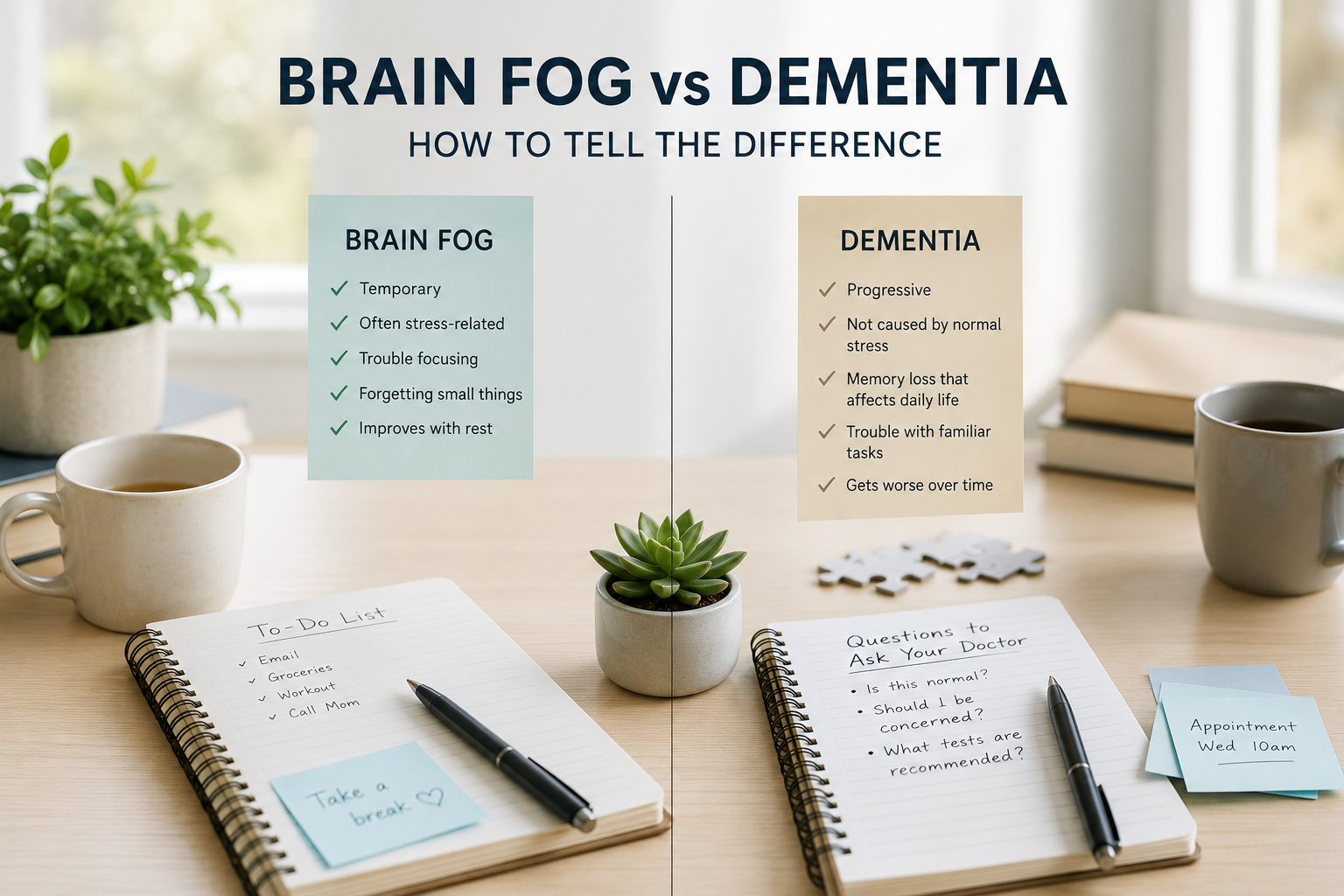
| Brain Fog | Dementia |
| Often linked to stress, sleep, hormones, or illness | Usually associated with neurological disease |
| Symptoms may fluctuate | Symptoms typically worsen over time |
| Mental clarity often improves with rest or treatment | Symptoms generally become more persistent |
| Individual usually recognizes difficulties | Awareness may decrease as symptoms progress |
| Daily functioning often remains intact | Daily functioning becomes increasingly affected |
| Often reversible or manageable | Requires medical evaluation and ongoing care |
Signs More Consistent With Brain Fog
Brain fog often presents as:
Mental Fatigue
You feel mentally exhausted, especially after busy days.
Difficulty Concentrating
Staying focused requires more effort than usual.
Word-Finding Issues
You know the word but need extra time to retrieve it.
Fluctuating Symptoms
Some days feel normal while others feel difficult.
Awareness of Mistakes
You recognize memory lapses and become frustrated by them.
These experiences are commonly associated with stress, sleep issues, or hormonal changes.
Signs More Consistent With Cognitive Decline
Certain patterns may deserve closer attention.
Repeating Questions
Asking the same questions multiple times without remembering the answers.
Difficulty Managing Familiar Tasks
Struggling with activities that were previously routine.
Confusion in Familiar Situations
Getting lost in familiar places or forgetting established routines.
Progressive Worsening
Symptoms gradually become more frequent and more severe.
Changes Noticed by Others
Family members or friends begin expressing concern.
The overall pattern matters more than any individual symptom.
Menopause Brain Fog vs Dementia
Many women worry that cognitive changes during menopause signal dementia.
In reality, menopause-related brain fog is extremely common.
Common symptoms include:
- Forgetting words
- Reduced concentration
- Mental fatigue
- Difficulty multitasking
The key difference is that menopause-related symptoms are often linked to hormonal changes and may improve as hormones stabilize.
Dementia, by contrast, typically involves progressive decline that worsens over time.
Can Anxiety Cause Symptoms That Feel Like Dementia?
Yes.
Anxiety can create symptoms that closely resemble cognitive decline.
Examples include:
- Difficulty concentrating
- Forgetfulness
- Mental fatigue
- Trouble recalling information
Ironically, worrying about memory problems can make memory performance feel worse.
The brain becomes focused on monitoring every lapse, increasing awareness of normal mistakes.
When Should You Consider Medical Evaluation?
While brain fog is often temporary, evaluation may be appropriate if:
- Symptoms are worsening
- Daily functioning is affected
- Family members express concern
- Confusion becomes more frequent
- Symptoms interfere with work or relationships
Seeking evaluation doesn’t mean something serious is wrong.
It simply provides an opportunity to understand what may be contributing to symptoms.
What You Can Do Right Now
If you’re experiencing brain fog, consider focusing on factors that support cognitive health.
Improve Sleep
Aim for consistent, restorative sleep whenever possible.
Manage Stress
Exercise, mindfulness, and relaxation practices may improve mental clarity.
Stay Physically Active
Movement supports both cardiovascular and cognitive function.
Monitor Patterns
Keep a simple record of symptoms to identify triggers and trends.
Address Underlying Health Concerns
Talk with your healthcare provider if symptoms persist.
Frequently Asked Questions
Can brain fog mimic dementia?
Yes. Brain fog can create symptoms that feel similar to cognitive decline, particularly when stress, poor sleep, or hormonal changes are involved.
Is brain fog permanent?
Not usually. Brain fog is often temporary and may improve when underlying causes are addressed.
Can menopause cause memory problems?
Yes. Many women experience memory lapses, word-finding difficulties, and concentration problems during menopause.
How do doctors tell the difference between brain fog and dementia?
Healthcare professionals evaluate symptom patterns, medical history, cognitive testing, and other contributing factors.
Final Thoughts
Brain fog can feel unsettling, especially when memory and focus don’t seem as sharp as they once were.
But experiencing brain fog does not automatically mean dementia.
In many cases, symptoms are linked to stress, sleep, hormones, burnout, or other manageable factors.
The most important thing is to pay attention to patterns, understand what may be contributing to symptoms, and seek guidance when concerns persist.
Replacing fear with understanding often begins by recognizing that not every cognitive change has the same meaning.