What Is Dementia? Symptoms, Causes, and What to Know
Last Updated: August 2026 What Is Dementia? Hearing the word “dementia” can feel frightening, especially when you or someone you care about has started noticing
Learn how memory and thinking can change with age, what may be considered normal, and when changes may deserve closer attention.
The brain changes throughout life. Understanding what's typical at each stage helps distinguish normal aging from concerning changes.
Subtle Changes May Begin
Learning May Take More Repetition
Experience Remains a Strength
Individual Paths Vary
Understanding the distinction between normal aging and potential cognitive decline is one of the most valuable insights you can have.
These experiences are common and typically not cause for concern:
These patterns may warrant closer attention and professional guidance:
These are the most commonly discussed conditions. Understanding them helps reduce fear and enables informed conversations.
Decades of research have identified key factors that support brain health throughout life.
Quality sleep clears metabolic waste from the brain. Chronic sleep deprivation is linked to faster cognitive decline.
Physical activity increases blood flow to the brain and stimulates growth of new neural connections. Even moderate activity helps.
Diets rich in omega-3s, antioxidants, and whole foods support brain health. The Mediterranean pattern shows consistent benefits.
Chronic stress elevates cortisol, which can damage the hippocampus. Stress reduction techniques support cognitive resilience.
Meaningful social interaction stimulates multiple cognitive domains. Social isolation is a significant risk factor for cognitive decline.
Learning new skills, reading, and engaging in mentally challenging activities build cognitive reserve and resilience.
Last Updated: August 2026 What Is Dementia? Hearing the word “dementia” can feel frightening, especially when you or someone you care about has started noticing

Last Updated: June 2026 Many people begin researching Alzheimer’s disease after noticing memory changes in themselves or a loved one. Perhaps you’ve forgotten a recent

Last Updated: June 2026 For many people, concern about dementia doesn’t begin with symptoms. It begins with family history. Perhaps a parent developed Alzheimer’s disease.

Last Updated: June 2026 If you’ve been researching memory changes, cognitive decline, or dementia risk, you’ve likely come across the term Mild Cognitive Impairment (MCI).

Last Updated: June 2026 Forgetting a name. Misplacing your keys. Walking into a room and forgetting why. Most adults experience moments like these as they
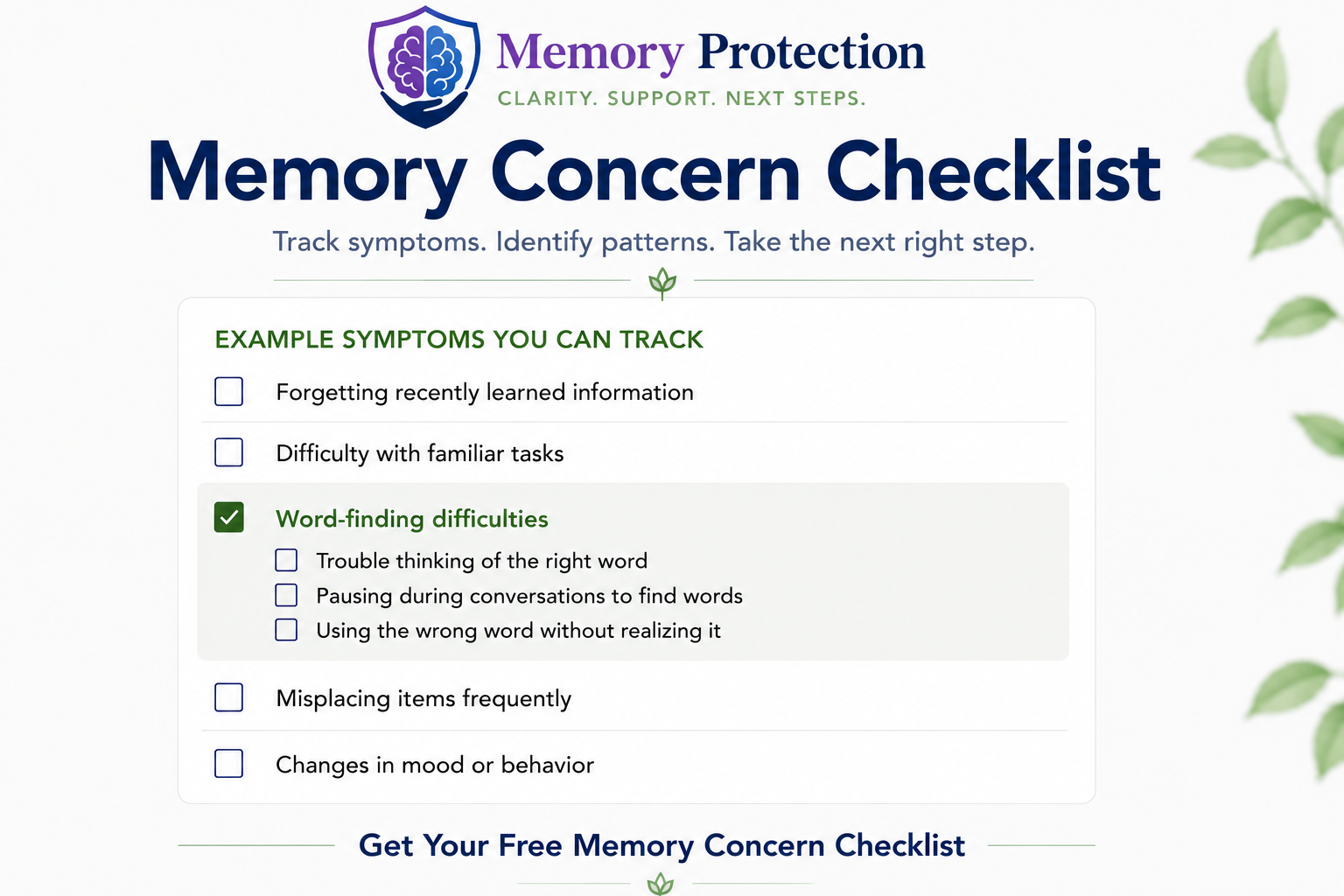
Our printable checklist helps you track memory changes systematically, identify patterns, and prepare for conversations with healthcare professionals.