
Last Updated: June 2026
Most people don’t wake up one day experiencing obvious cognitive decline.
Instead, changes often begin subtly.
A forgotten appointment. Difficulty finding the right word. Trouble following a conversation. Increased reliance on notes and reminders.
Because these changes can be gradual, they’re easy to dismiss as stress, aging, or simply having too much on your mind.
And often, they are.
However, some cognitive changes deserve closer attention—especially when they become more frequent, more noticeable, or begin affecting daily life.
Understanding the difference between normal age-related changes and potential warning signs can help you make informed decisions without jumping to worst-case conclusions.
What Is Cognitive Decline?
Cognitive decline refers to changes in thinking abilities that affect one or more areas of cognition, including:
- Memory
- Attention
- Language
- Problem-solving
- Decision-making
- Processing speed
Some degree of cognitive slowing can occur as part of normal aging.
The concern arises when changes become greater than expected for age or begin interfering with everyday functioning.
Why Early Signs Are Often Missed
Many early cognitive changes are subtle.
People often explain them away as:
- Stress
- Lack of sleep
- Busy schedules
- Hormonal changes
- Normal aging
Because the changes are gradual, both the individual and their family members may adapt without realizing a pattern is developing.
That’s why it’s important to focus on trends rather than isolated incidents.
Early Sign #1: Increased Difficulty Finding Words
Occasionally forgetting a word is common.
However, you may want to pay closer attention if:
- Word-finding difficulties become frequent
- Conversations become difficult
- You regularly substitute incorrect words
- Communication becomes frustrating
Language-related changes can sometimes be among the earliest cognitive symptoms people notice.
Early Sign #2: Repeating Questions or Stories
Everyone repeats themselves occasionally.
The concern increases when:
- You don’t remember already asking the question
- Others frequently point out repetition
- The behavior becomes more frequent over time
This can suggest difficulty retaining new information.
Early Sign #3: Difficulty Following Conversations
Some people notice:
- Losing track of discussions
- Trouble following complex conversations
- Difficulty processing information quickly
This may be especially noticeable in group settings or noisy environments.
While hearing issues can also contribute, persistent changes may warrant attention.
Early Sign #4: Increased Dependence on Notes and Reminders
Many people use reminders and calendars.
The difference is whether these tools are helping with organization—or compensating for increasing forgetfulness.
Questions to consider:
- Are you relying on reminders significantly more than before?
- Are you forgetting important tasks without them?
- Is the trend increasing over time?
Early Sign #5: Difficulty Managing Familiar Tasks
Tasks that were once routine may begin requiring more effort.
Examples include:
- Paying bills
- Following recipes
- Managing medications
- Using familiar technology
Everyone has occasional off days.
The concern is when previously familiar activities become consistently difficult.
Early Sign #6: Misplacing Items More Frequently
Losing keys or glasses occasionally is normal.
Potential warning signs may include:
- Placing items in unusual locations
- Being unable to retrace your steps
- Frequently accusing others of moving items
- Increasing frustration around misplaced belongings
The pattern matters more than any individual event.
Early Sign #7: Changes in Judgment or Decision-Making
Cognitive changes aren’t limited to memory.
Some individuals experience:
- Poor financial decisions
- Reduced awareness of risks
- Difficulty solving problems
- Unusual choices that seem out of character
Family members are often the first to notice these changes.
Early Sign #8: Confusion in Familiar Situations
One of the more concerning signs involves becoming disoriented in familiar environments.
Examples may include:
- Getting lost on familiar routes
- Forgetting established routines
- Confusion about dates or appointments
- Difficulty navigating familiar places
These situations deserve medical attention, particularly if they become recurrent.
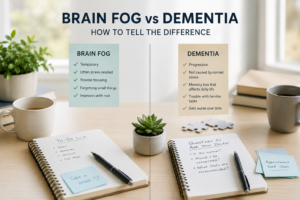
Normal Aging vs Early Cognitive Decline
| Common Age-Related Changes | Potential Cognitive Decline |
| Occasionally forgetting names | Forgetting recently learned information frequently |
| Misplacing items occasionally | Consistently placing items in unusual locations |
| Slower recall | Difficulty retaining new information |
| Needing reminders | Increasing dependence on reminders for basic tasks |
| Occasional distraction | Persistent confusion or disorientation |
| Stable symptoms | Symptoms that worsen over time |
Risk Factors That May Increase Concern
Certain factors may increase the likelihood of cognitive decline.
These include:
Family History
Having a parent or sibling with dementia may increase risk.
Cardiovascular Health
Conditions such as:
- High blood pressure
- Diabetes
- Heart disease
can affect brain health.
Poor Sleep
Chronic sleep problems may impact memory and cognitive performance.
Social Isolation
Social engagement appears to play an important role in healthy cognitive aging.
Physical Inactivity
Regular movement supports both physical and cognitive health.
When Should You Seek Evaluation?
Consider speaking with a healthcare professional if:
- Symptoms are worsening
- Family members have expressed concern
- Daily functioning is affected
- Memory changes interfere with work or relationships
- Confusion is becoming more frequent
Seeking evaluation is not about expecting the worst.
It’s about gaining clarity and identifying possible causes.
Many memory concerns have explanations that are treatable or manageable.
What To Do If You’re Concerned
Track Patterns
Keep a simple record of symptoms and frequency.
Prioritize Sleep
Sleep quality significantly influences cognitive function.
Manage Stress
Chronic stress can affect memory and attention.
Stay Physically Active
Exercise supports healthy aging.
Schedule an Evaluation If Needed
If symptoms persist or worsen, discussing concerns with a healthcare professional may provide valuable insight.
Frequently Asked Questions
What is the earliest sign of cognitive decline?
Early signs vary but often include subtle memory changes, difficulty finding words, or increased reliance on reminders.
Does cognitive decline always lead to dementia?
No. Some cognitive changes may remain stable or result from reversible causes.
Can stress mimic cognitive decline?
Yes. Stress, anxiety, and sleep deprivation can create symptoms that resemble cognitive impairment.
Should I be worried if I forget names?
Occasional difficulty recalling names is common with aging. The overall pattern and progression of symptoms are more important than isolated incidents.
Final Thoughts
Many early cognitive changes are subtle enough to be overlooked.
And in many cases, they have explanations unrelated to dementia.
The goal isn’t to monitor every forgotten word or misplaced item with alarm.
Instead, it’s to pay attention to patterns, understand what may be normal, and recognize when further evaluation could be helpful.
Knowledge creates clarity.
And clarity is often the first step toward making informed decisions about your cognitive health.