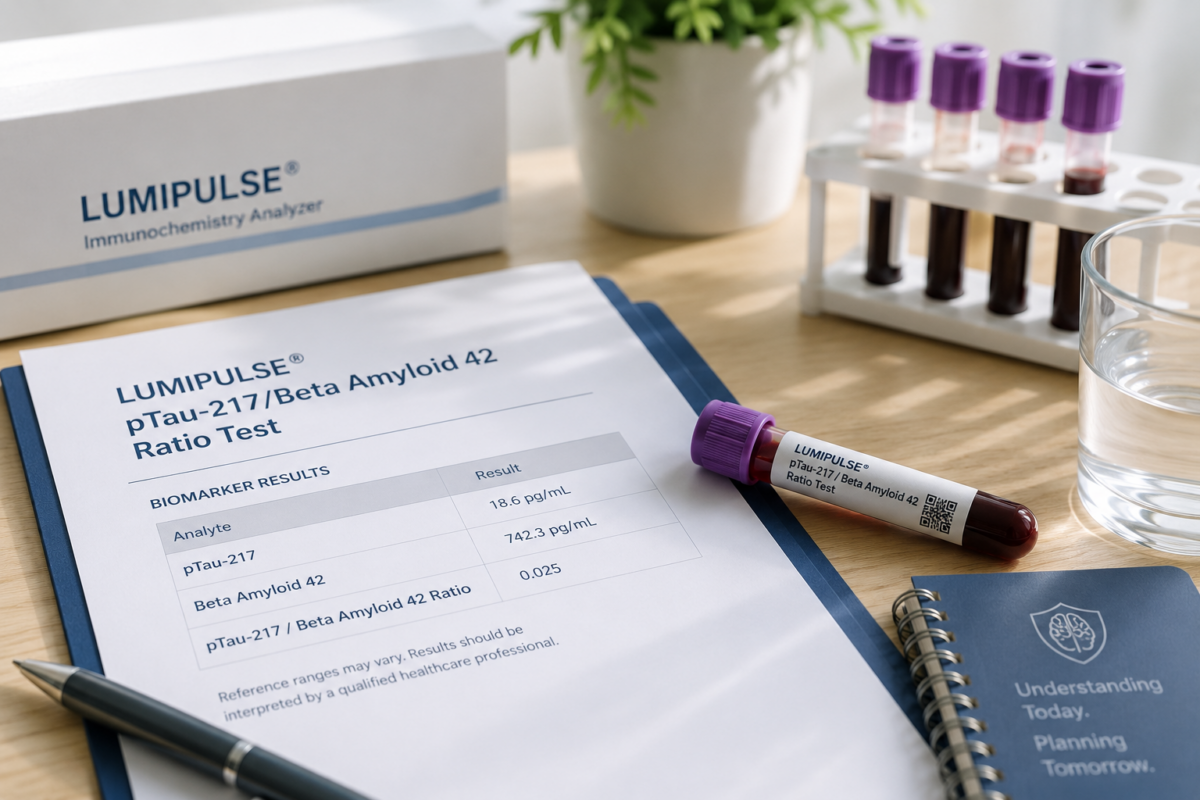
What Should You Do After an Alzheimer’s Biomarker Test?


Last Updated: June 2026
Receiving the results of an Alzheimer’s biomarker test can bring a mix of emotions.
For some people, the experience provides reassurance.
For others, it raises new questions and uncertainties.
You may be wondering:
- What does this result actually mean?
- Does an abnormal result mean I have Alzheimer’s disease?
- What happens next?
- Should I get additional testing?
- How worried should I be?
These questions are completely understandable.
The good news is that biomarker test results are only one part of a much larger picture.
Whether you’ve had a blood test, imaging study, or another form of biomarker evaluation, understanding what your results mean—and what they don’t mean—can help you make informed decisions moving forward.
This guide explains practical next steps after an Alzheimer’s biomarker test and how to approach the results with clarity rather than fear.
First: Don’t Jump to Conclusions
One of the most important things to remember is this:
An abnormal biomarker result is not the same as an Alzheimer’s diagnosis.
Likewise, a normal result does not guarantee that future cognitive concerns will never develop.
Biomarker tests provide information about biological changes that may be associated with Alzheimer’s disease.
They do not tell the entire story.
Healthcare professionals consider many factors when evaluating cognitive health, including:
- Symptoms
- Medical history
- Cognitive testing
- Physical examinations
- Imaging studies
- Biomarker results
The goal is to understand the complete picture rather than relying on a single test result.
Understanding What Biomarkers Measure
Biomarkers are biological indicators that may provide information about processes occurring within the body.
In Alzheimer’s disease research, common biomarkers include:
pTau-217
A form of tau protein associated with Alzheimer’s-related changes.
Beta-Amyloid
A protein associated with amyloid plaque formation.
Amyloid-Related Measures
Used in certain blood tests and imaging studies.
These biomarkers may help identify biological changes associated with Alzheimer’s disease, but they do not directly measure:
- Memory
- Thinking abilities
- Daily functioning
- Quality of life
This distinction is important.
A person can have abnormal biomarkers and function normally.
Likewise, someone may experience cognitive symptoms that are unrelated to Alzheimer’s biomarkers.
What Does an Abnormal Result Mean?
Many people assume an abnormal result means:
“I have Alzheimer’s.”
In reality, the situation is often more complex.
An abnormal biomarker result may indicate evidence of biological changes associated with Alzheimer’s disease.
However, the result does not automatically determine:
- Whether symptoms are present
- The severity of symptoms
- Future progression
- Individual outcomes
Healthcare professionals interpret results within the broader clinical context.
This is why follow-up conversations are so important.
What Does a Normal Result Mean?
Normal results can be reassuring, but they should still be interpreted carefully.
Memory concerns can have many causes beyond Alzheimer’s disease, including:
- Stress
- Anxiety
- Depression
- Sleep disorders
- Hormonal changes
- Medication effects
- Vitamin deficiencies
- Other neurological conditions
A normal biomarker result may reduce concern about certain Alzheimer’s-related changes, but it does not necessarily explain every symptom.
If concerns persist, additional evaluation may still be appropriate.
Step 1: Review Your Results With a Qualified Healthcare Professional
The internet can provide education.
It cannot provide personalized interpretation.
If you’ve received biomarker test results, your first priority should be reviewing them with the healthcare professional who ordered the test.
Important questions include:
- What exactly was measured?
- What do my results indicate?
- What are the limitations of this test?
- How do the results fit with my symptoms?
- Should I consider additional testing?
A professional interpretation can provide context that raw numbers alone cannot.
Step 2: Consider Your Symptoms
Biomarker results are only one part of the picture.
Ask yourself:
Are symptoms present?
Have symptoms changed over time?
Are daily activities being affected?
Have family members noticed changes?
Some people pursue testing because they are experiencing memory concerns.
Others pursue testing despite having no noticeable symptoms.
Understanding where you fall on that spectrum can help guide next steps.
Step 3: Understand Your Risk Factors
Your healthcare provider may discuss additional factors that influence cognitive health.
These can include:
Age
Age remains one of the strongest risk factors for Alzheimer’s disease.
Family History
A family history of Alzheimer’s disease may influence risk, though it does not determine outcomes.
Cardiovascular Health
Blood pressure, cholesterol, diabetes, and vascular health can all affect cognitive function.
Lifestyle Factors
Sleep, exercise, nutrition, stress management, and social engagement may also influence long-term brain health.
Biomarker results are most useful when considered alongside these broader factors.
Step 4: Determine Whether Additional Testing Is Recommended
Depending on your situation, additional evaluation may be suggested.
This could include:
Cognitive Testing
Formal assessments that evaluate memory, attention, language, and executive function.
Neurological Evaluation
A specialist may help determine whether symptoms warrant further investigation.
Imaging Studies
In some situations, brain imaging may be considered.
Ongoing Monitoring
Some individuals may simply benefit from periodic follow-up.
The appropriate path depends on the individual.
Step 5: Track Changes Over Time
One of the most useful things you can do is monitor symptoms consistently.
Rather than focusing on isolated incidents, pay attention to:
- Frequency
- Severity
- Progression
- Impact on daily life
Helpful examples include:
- Forgetting appointments
- Losing track of conversations
- Difficulty finding words
- Trouble managing familiar tasks
Tracking patterns can provide valuable information during future medical appointments.
Step 6: Avoid Catastrophic Thinking
Many people immediately imagine the worst after receiving an abnormal result.
This reaction is understandable.
However, uncertainty does not automatically mean disaster.
Remember:
- Biomarkers are not diagnoses.
- Results require context.
- Individual outcomes vary.
- Many factors influence cognitive health.
Approaching the situation with curiosity rather than panic can help support better decision-making.
Questions to Ask After Receiving Results
If you’ve recently received biomarker testing, consider asking:
What do these results actually mean?
How certain are these findings?
What additional information do we need?
Should I consider cognitive testing?
Should I see a neurologist?
How often should my cognitive health be monitored?
Are there lifestyle changes I should focus on?
What symptoms should I watch for?
These conversations can help transform uncertainty into a practical plan.
Should You Tell Family Members?
This is a personal decision.
Some people find support by sharing information with trusted family members.
Others prefer to wait until they better understand the results.
Helpful considerations include:
- Emotional support
- Family medical history
- Future planning needs
- Caregiver involvement
There is no universally correct approach.
The right decision depends on your circumstances and comfort level.
What Can You Do Today?
Regardless of test results, many people find it helpful to focus on habits that support overall brain health.
Examples include:
Prioritizing Sleep
Sleep plays an important role in memory and cognitive function.
Staying Physically Active
Regular movement supports both cardiovascular and brain health.
Managing Chronic Conditions
Blood pressure, diabetes, and cardiovascular health all matter.
Remaining Socially Engaged
Meaningful social interaction supports overall wellbeing.
Staying Mentally Active
Learning, reading, hobbies, and intellectual engagement can help maintain cognitive function.
These habits are valuable regardless of biomarker status.
When Should You Seek Further Evaluation?
Consider speaking with a healthcare professional if you notice:
- Increasing memory difficulties
- Frequent confusion
- Difficulty managing familiar tasks
- Changes in judgment
- Noticeable cognitive decline over time
- Concerns expressed by family members
Early conversations can often provide clarity and direction.
Key Takeaways
Receiving the results of an Alzheimer’s biomarker test can feel overwhelming, but it is important to remember that biomarker findings are only one piece of a much larger picture.
An abnormal result does not automatically mean Alzheimer’s disease is present.
A normal result does not explain every cognitive concern.
The most important next steps include:
- Understanding your results
- Reviewing findings with a healthcare professional
- Considering additional testing if recommended
- Monitoring symptoms over time
- Focusing on long-term brain health
Most importantly, avoid making assumptions based on a single result.
The goal is not to react with fear but to use information thoughtfully and make informed decisions about what comes next.
Medical Disclaimer
This article is for educational purposes only and is not intended to diagnose, treat, or provide medical advice. Always consult a qualified healthcare professional regarding symptoms, testing decisions, or concerns about cognitive health.