Last Updated: June 2026
For many people, the idea of cognitive testing can feel intimidating.
Perhaps you’ve noticed changes in memory, concentration, or mental clarity and are wondering whether it’s time to seek evaluation.
Or maybe a healthcare provider has suggested testing, and you’re unsure what to expect.
One of the biggest reasons people delay evaluation is fear of the unknown.
Questions like these are common:
- What happens during cognitive testing?
- Is it difficult?
- Will I be diagnosed with dementia?
- What if I don’t do well?
The good news is that cognitive testing is designed to gather information—not to judge, label, or embarrass you.
Its purpose is to help healthcare professionals better understand how your brain is functioning and determine whether additional evaluation may be helpful.
Understanding the process can make it feel much less overwhelming.
What Is Cognitive Testing?
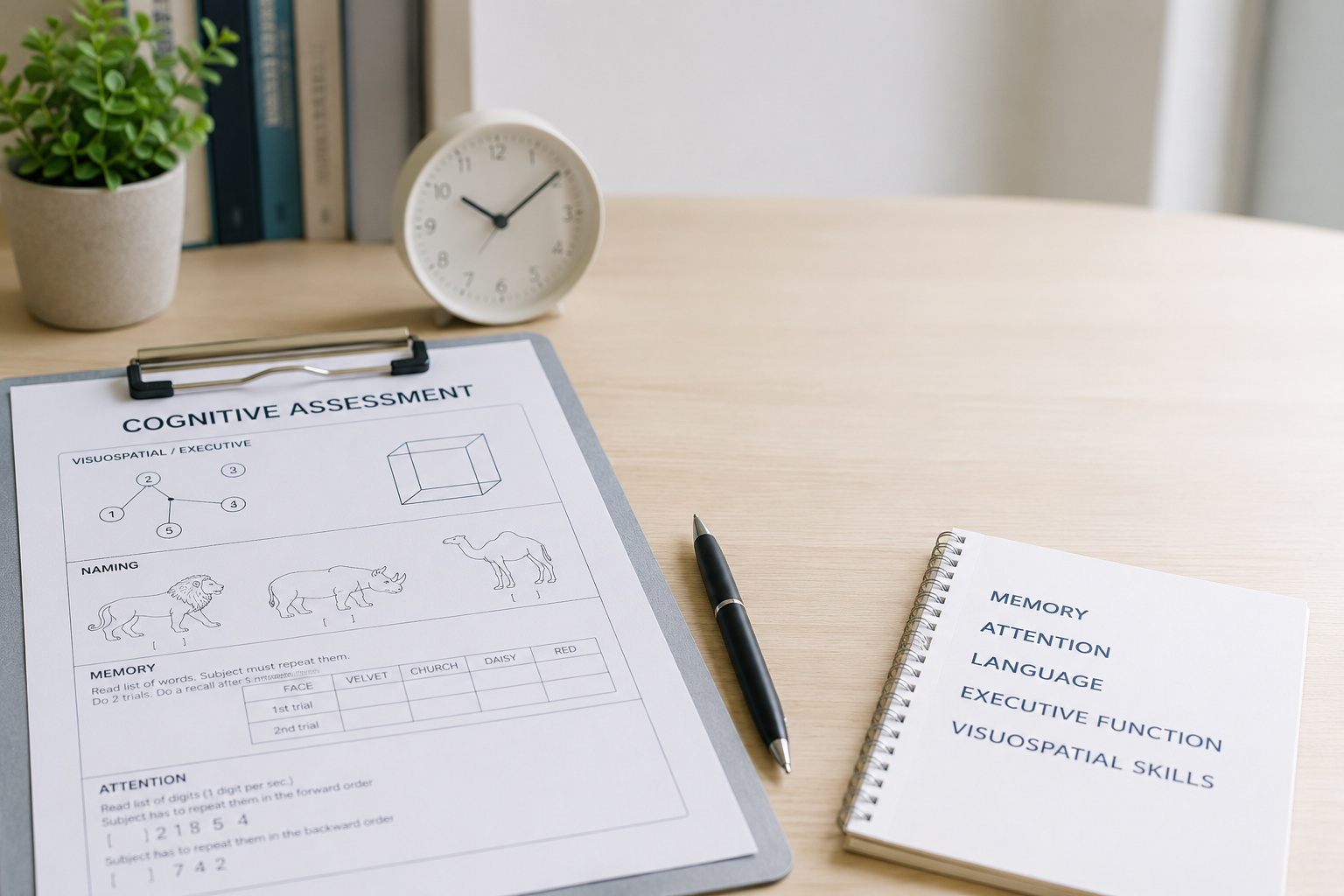
Cognitive testing is a collection of assessments that evaluate different areas of thinking and memory.
Healthcare professionals may assess:
- Memory
- Attention
- Language
- Problem-solving
- Reasoning
- Processing speed
- Executive function
The goal is to compare your performance to what is generally expected for someone of a similar age and background.
Testing provides valuable information but is only one part of a larger evaluation process.
Why Might a Doctor Recommend Cognitive Testing?
Healthcare providers may suggest testing if:
- Memory concerns are becoming more noticeable
- Family members have observed changes
- Daily functioning is being affected
- Cognitive symptoms are causing significant concern
- There is a need to establish a baseline for future comparison
Testing helps identify whether symptoms appear consistent with normal aging or whether additional investigation may be warranted.
Step 1: Medical History Review
Before formal testing begins, a healthcare professional will typically discuss your medical history.
Topics may include:
Current Symptoms
When did symptoms begin?
How often do they occur?
Have they changed over time?
General Health
Certain medical conditions can affect cognitive performance.
Examples include:
- High blood pressure
- Diabetes
- Thyroid disorders
- Sleep disorders
Medications
Some medications can contribute to memory complaints or brain fog.
Family History
Healthcare providers may ask about:
- Alzheimer’s disease
- Dementia
- Neurological conditions
among close family members.
Step 2: Discussion of Cognitive Concerns
The healthcare provider will often ask specific questions about your experiences.
Examples may include:
- What memory changes have you noticed?
- Are symptoms affecting daily life?
- Have family members expressed concern?
- What situations seem most challenging?
This conversation helps create context for testing results.
Step 3: Cognitive Assessment
This is the part most people think of when they hear the term “cognitive testing.”
The assessment typically involves a series of questions and tasks.
The exact format varies depending on the healthcare provider and testing approach.
Memory Tasks
You may be asked to:
- Remember words
- Recall information after a short delay
- Repeat information
These tasks help evaluate short-term memory and recall.
Attention Tasks
Examples may include:
- Following instructions
- Counting exercises
- Concentration activities
Attention plays a critical role in memory performance.
Language Tasks
You may be asked to:
- Name objects
- Define words
- Follow verbal instructions
These tasks assess language and communication abilities.
Problem-Solving Tasks
Some assessments evaluate reasoning and decision-making abilities.
These exercises help identify strengths and areas that may require further attention.
Step 4: Functional Assessment
Healthcare professionals often want to understand how cognitive changes affect daily life.
Topics may include:
- Managing finances
- Driving
- Household responsibilities
- Medication management
- Social activities
This information is important because daily functioning is often a key factor in determining whether symptoms may be consistent with normal aging, MCI, or dementia.
Step 5: Additional Evaluation (If Needed)
In some cases, healthcare providers may recommend additional assessments.
These could include:
Physical Examination
To evaluate overall health.
Blood Tests
To identify potential contributors such as:
- Vitamin deficiencies
- Thyroid disorders
- Other medical conditions
Sleep Evaluation
Sleep disorders can significantly affect cognitive performance.
Imaging Studies
In certain situations, brain imaging may be recommended.
Additional testing depends on individual circumstances and symptoms.
How Long Does Cognitive Testing Take?
The length of testing varies.
Brief Screening
Some cognitive screening tools take only a few minutes.
Comprehensive Evaluations
More detailed assessments may take several hours and may occur across multiple appointments.
The type of evaluation depends on the reason for testing and the healthcare provider’s recommendations.
What Does Cognitive Testing Feel Like?
Many people worry that testing will feel stressful or intimidating.
In reality, most assessments feel more like structured conversations and exercises.
It’s normal to:
- Forget some answers
- Feel challenged by certain questions
- Need extra time to respond
The goal is not perfection.
The goal is gathering useful information.
Healthcare professionals understand that everyone has strengths and weaknesses.
What Happens After Testing?
Once testing is complete, results are reviewed within the context of:
- Age
- Education
- Health history
- Symptoms
- Daily functioning
A healthcare professional will discuss findings and explain whether any additional evaluation is recommended.
What If Results Are Normal?
This is a common outcome.
Normal results may suggest that symptoms are related to factors such as:
- Stress
- Poor sleep
- Anxiety
- Hormonal changes
- Normal aging
For many individuals, testing provides reassurance and peace of mind.
What If Results Show Cognitive Changes?
Cognitive changes do not automatically mean dementia.
Results may suggest:
Mild Cognitive Impairment (MCI)
Noticeable cognitive changes that do not significantly interfere with independence.
Need for Further Evaluation
Additional information may be needed before conclusions can be reached.
Other Contributing Factors
Medical or lifestyle factors may be influencing cognitive performance.
The purpose of testing is understanding—not assuming the worst.
Common Myths About Cognitive Testing
Myth: Testing Diagnoses Dementia Immediately
Reality:
Testing is one part of a broader evaluation process.
Myth: If I Do Poorly, I Have Alzheimer’s Disease
Reality:
Many factors can affect test performance.
Myth: Testing Is Only for Older Adults
Reality:
Anyone experiencing cognitive concerns may discuss evaluation with a healthcare professional.
Myth: It’s Better Not to Know
Reality:
Many people find that information reduces uncertainty and helps guide future decisions.
Frequently Asked Questions
Is cognitive testing painful?
No. Cognitive testing involves questions, conversations, and thinking exercises.
Can I prepare for cognitive testing?
There is no special preparation required. It’s most helpful to arrive well-rested and ready to discuss your concerns.
What if I feel nervous?
Feeling nervous is completely normal. Healthcare professionals understand that many people feel anxious about testing.
Can testing determine whether memory problems are normal aging?
Testing may provide valuable information that helps healthcare professionals evaluate cognitive concerns.
How often should testing be repeated?
This depends on individual circumstances and should be discussed with your healthcare provider.
Final Thoughts
For many people, cognitive testing sounds far more intimidating than it actually is.
In reality, it is simply a tool that helps healthcare professionals better understand how your brain is functioning.
The goal is not to pass or fail.
The goal is to gather information, reduce uncertainty, and make informed decisions about your health.
If memory concerns have been weighing on your mind, understanding what happens during testing may be the first step toward feeling more confident about what comes next.