What Should You Do After an Alzheimer’s Biomarker Test?
Last Updated: June 2026 Receiving the results of an Alzheimer’s biomarker test can bring a mix of emotions. For some

Concerned about memory changes but unsure what to do next?
Understanding your options can help reduce uncertainty and guide informed decisions.
Cognitive evaluations are thorough but non-invasive. Here's what you can typically expect.
Your doctor will review your complete health history, including medications, past conditions, family history, and current symptoms. This helps identify potential contributing factors.
You'll describe specific concerns in your own words. Bringing a family member can provide additional perspective on changes they've observed.
Brief, standardized tests evaluate memory, attention, language, and problem-solving. These are not pass/fail—they simply help identify patterns.
Your doctor will review current medications, supplements, sleep habits, stress levels, and other lifestyle factors that may affect cognition.
Based on initial findings, your doctor may recommend blood tests, brain imaging, or referral to a specialist such as a neurologist or neuropsychologist.
Not every memory lapse means you need cognitive testing. But an evaluation may be helpful when changes are persistent, getting worse, or beginning to affect everyday life.
Memory, focus, or thinking difficulties have become more noticeable over time rather than improving.
Managing medications, finances, appointments, directions, or other familiar tasks has become more difficult.
Family members, friends, or coworkers have noticed changes in your memory, thinking, or behavior.
Memory or thinking concerns continue even after addressing factors such as stress, poor sleep, or other possible causes.
Many factors can affect memory and thinking. Some are temporary and manageable, while certain patterns may be worth discussing with a healthcare professional.
Often temporary and manageable
Chronic stress elevates cortisol, temporarily impairing memory formation and recall.
Sleep deprivation disrupts memory consolidation and reduces mental clarity.
Anxiety can create a "fog" that makes concentration and memory retrieval difficult.
Thyroid, menopause, and other hormonal shifts can affect cognitive function.
Signs worth discussing with a professional
Memory or thinking problems that are getting noticeably worse over months.
Family members or close friends express concern about your memory or behavior.
Difficulty managing finances, medications, or familiar routines.
Worry that doesn't go away even after addressing sleep, stress, and other factors.
Research consistently shows that lifestyle factors significantly influence long-term cognitive health. Small, consistent actions add up.
Last Updated: June 2026 Receiving the results of an Alzheimer’s biomarker test can bring a mix of emotions. For some

Last Updated: June 2026 If you’ve been researching memory concerns, Alzheimer’s disease, or new biomarker tests, you’ve probably encountered the

Last Updated: June 2026 In recent years, researchers have made significant progress in developing tests that may help identify biological

Last Updated: June 2026 One of the most common questions people ask after learning about dementia risk is: “Is there

Last Updated: June 2026 For many people, the idea of cognitive testing can feel intimidating. Perhaps you’ve noticed changes in

Last Updated: June 2026 Many people worry about memory changes long before they ever consider cognitive testing. Perhaps you’ve been
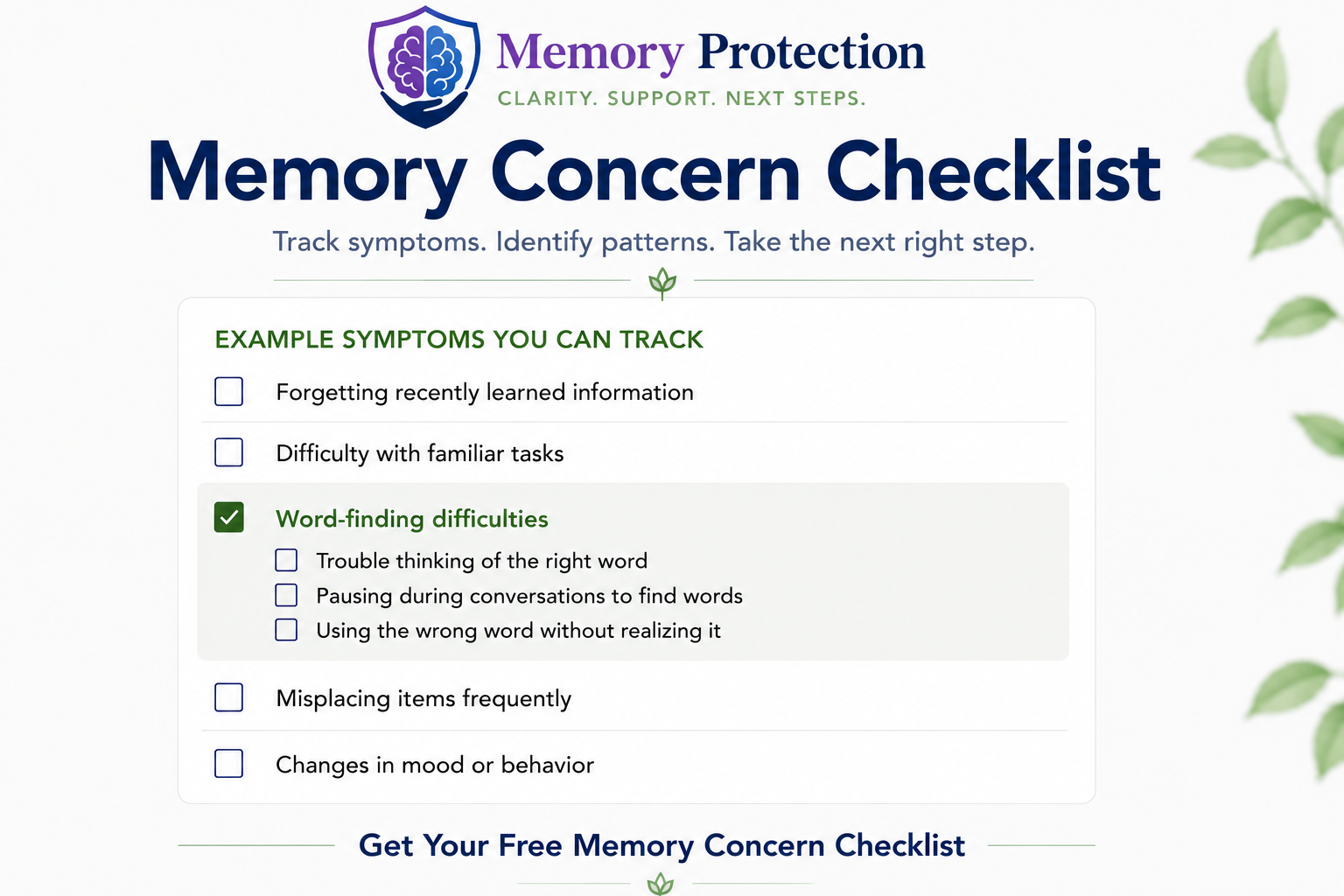
Our Cognitive Symptom Tracker helps you monitor patterns over time, identify trends, and prepare for productive conversations with healthcare providers.