Practical Tools for Memory

Concerns and Cognitive Health

When you're worried about memory changes, uncertainty can feel overwhelming. The right tools won't provide a diagnosis, but they can help you organize observations, track symptoms, and feel more confident about your next steps.

Your path from concern to clarity:

Checklist

Identify concerns

Tracker

Monitor changes

Planning Guide

Next steps

When to Take Action

Not Sure Where To Begin?

Click the concern that resonates most. We'll point you toward the right resources.

Learning

Acquiring new knowledge and skills throughout life

Increasing Confusion

Getting confused in familiar places or during routine activities

Difficulty with Familiar Tasks

Struggling with activities that were once second nature

Noticeable Changes Over Time

A clear decline that others have started to notice as well

Decision Making

Evaluating options and choosing appropriate actions

Communication

Expressing thoughts and understanding others

Information Processing

Speed and accuracy of mental operations

Executive Function

Planning, organizing, and managing multiple tasks

Am I imagining these symptoms?

Self-doubt is common. Learn how to distinguish between normal worry and genuine concerns worth tracking.If you're noticing changes that concern you, you're not imagining them. The key is documenting what you observe so you can evaluate patterns objectively.

Should I talk to a doctor?

Know when professional evaluation is appropriate and how to prepare for that conversation.If symptoms are persistent, worsening, or affecting daily life, it's worth discussing with a healthcare professional. Preparation makes these conversations more productive.

Is this normal aging?

Understand the difference between typical age-related changes and symptoms that may deserve closer attention.Some memory changes are a normal part of aging. Others aren't. Our comparison guides help you understand where your experience fits.

How can I track changes?

Practical tools to monitor symptoms over time and identify patterns that matter.Consistent tracking reveals patterns that single observations miss. Our tracker helps you document frequency, triggers, and changes over weeks and months.

Featured Resources

Your Core Toolkit

These two resources are designed to work together—helping you identify concerns and track them over time.

Featured Resources
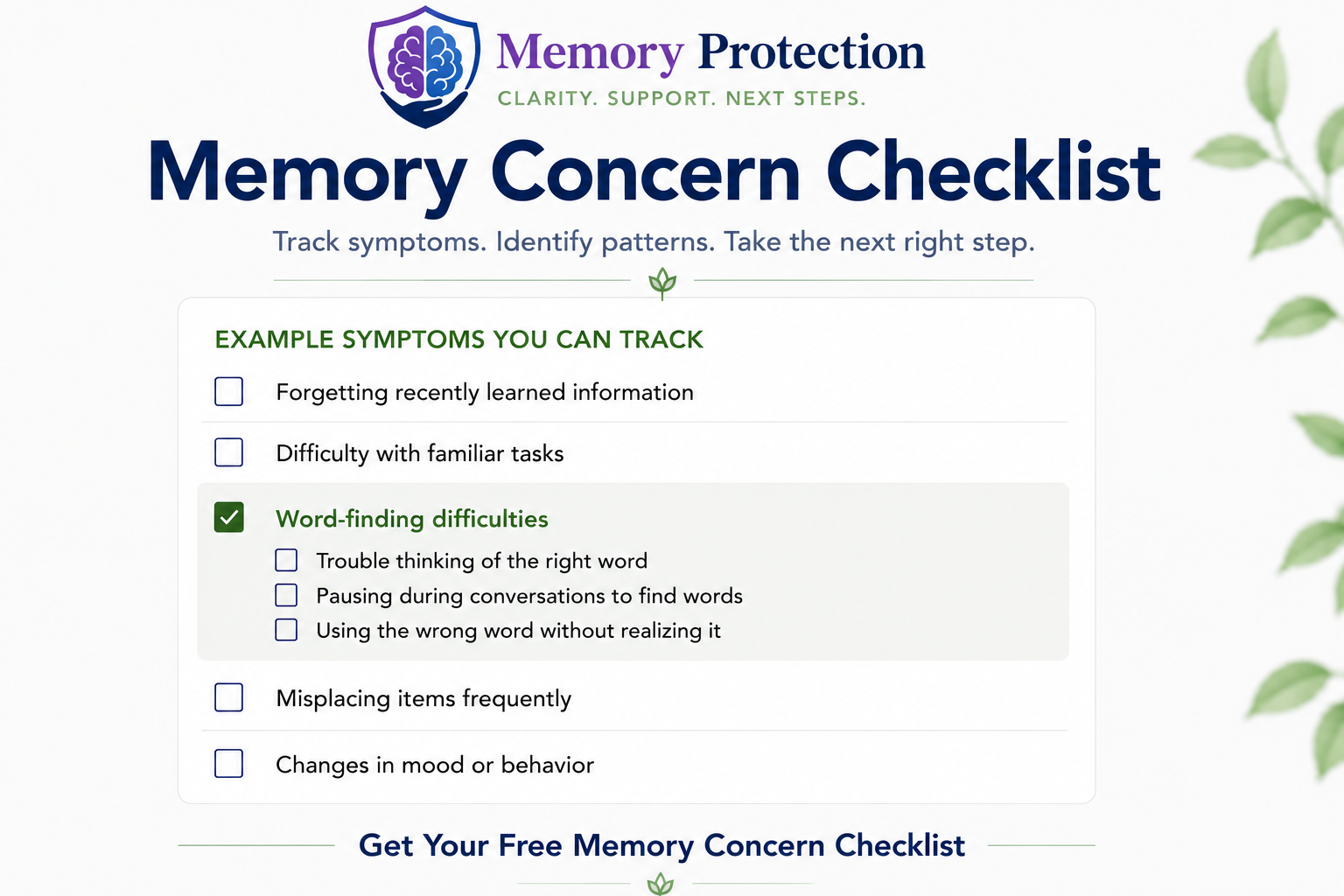
Memory Concern Checklist

A structured way to identify common memory concerns, recognize patterns, and understand which symptoms may deserve attention.

Download Checklist — Free PDF
PDF • 3 pages • No email required
New
Cognitive Symptom Tracker

Track memory concerns over time, record patterns, and build a clear picture to share with healthcare professionals.

Download Tracker — Free
PDF • 4 pages • No email required
Coming Soon

Prepare For More Productive Conversations

Tools to help you make the most of your time with healthcare professionals.

Coming Soon
Questions To Ask Your Doctor

A curated list of important questions to ask during cognitive evaluations, follow-ups, and care planning conversations.

Notify Me When Available
Coming Soon
Appointment Preparation Worksheet

Organize your symptoms, questions, and concerns before your visit so nothing gets forgotten in the moment.

Notify Me When Available
Continue Learning

Most Popular Guides

Deep-dive articles to help you understand memory concerns and cognitive health.

Memory
Memory Concerns & Warning Signs
8 min read
Comparison
Normal Aging vs. Dementia
10 min read
Conditions
What Is Mild Cognitive Impairment?
7 min read
Testing
When Should You Get Cognitive Testing?
6 min read
Recommended Pathway

If You're Just Getting Started

Follow this journey to move from uncertainty to informed action.

Understand Symptoms

Learn what's normal and what may deserve attention. Explore common memory concerns and their causes.

Learn What's Normal

Distinguish between typical age-related changes and symptoms that may indicate something more.

Track Changes

Use practical tools to monitor symptoms over time and identify meaningful patterns.

Seek Evaluation If Needed

Know when to consult a professional and how to prepare for productive conversations.

Build Long-Term Brain Health Habits

Focus on sleep, exercise, nutrition, and social engagement to support cognitive wellness.

Information Creates Clarity

Experiencing memory changes can feel isolating and frightening.

But uncertainty often becomes easier to manage when concerns are organized, tracked, and understood.

These resources are designed to support—not replace—medical advice.

Their purpose is to help people feel informed, prepared, and empowered as they navigate questions about cognitive health.

Concern
Organization
Understanding
Confidence

Download Your Free Memory Concern Checklist

Start tracking symptoms, identifying patterns, and gaining greater clarity about memory concerns.